

Stainless steel sculptures are favored for their unique advantages that cater to functional and aesthetic needs. Here are some of the main benefits that make stainless steel a popular choice for sculptural art:
Durability and Corrosion Resistance: Stainless steel is highly resistant to corrosion, rust, and tarnishing, making it ideal for both indoor and outdoor settings. Without deteriorating, it can withstand various environmental conditions, including rain, snow, and high humidity. Coastal landscape sculptures often use stainless steel for this reason.
Low Maintenance: Due to their resistance to corrosion and tarnish, stainless steel sculptures require minimal upkeep. It is much easy to clean the stainless steel sculpture. They maintain their appearance over time with little more than basic cleaning, unlike materials such as bronze or stone which may require more attention.

Versatility in Design: Stainless steel is highly malleable, allowing artists to create a wide range of shapes and intricate designs. It can be polished to a high shine, brushed for a matte finish, or textured in numerous ways, offering versatility in artistic expression.

Modern Aesthetic: With its sleek, contemporary look, stainless steel complements modern and avant-garde art. Its reflective surface interacts with light and the environment, creating dynamic visual effects.

Strength and Structural Stability: Stainless steel has a high strength-to-weight ratio, which makes it suitable for large-scale sculptures or intricate designs that require a strong framework without being overly heavy.

Sustainability: Stainless steel is recyclable, aligning with environmental sustainability concerns. Its long lifespan and recyclability reduce the ecological impact.
Weather and Heat Resistance: Stainless steel sculptures are resistant to extreme temperatures, making them suitable for various climates, from hot and sunny to cold and frosty environments. Most austenitic steels, with chromium contents of at least 18%, can be used at temperatures up to 870°C and Grades 309, 310 and 2111HTR (UNS S30815) even higher.

Safety and Cleanliness: Stainless steel does not harbor bacteria or pathogens, making it a hygienic choice for public art installations. Its smooth surface also reduces the risk of injury compared to more porous or rough materials.
Reflective Qualities: The reflective surface of stainless steel adds a dynamic element to sculptures, interacting with light and surroundings to create visually captivating effects that change with the viewer’s perspective.

Customization: Stainless steel sculptures can be customized in size, shape, and design to fit specific spaces or themes, making it an ideal medium for commissioned works.
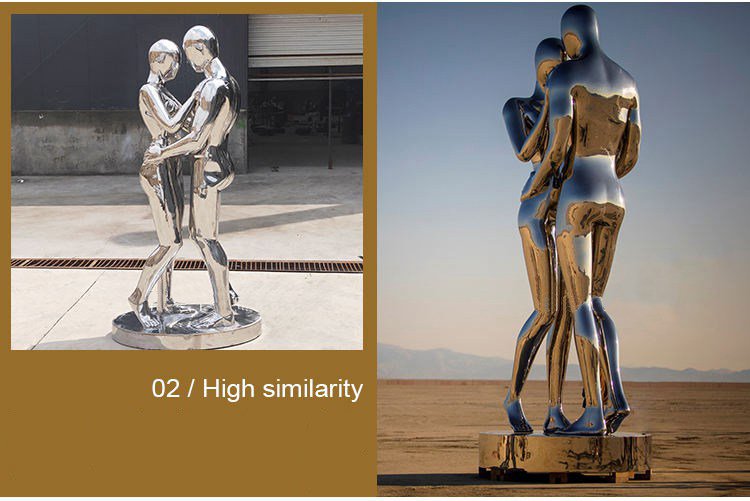
Modern Aesthetic: The contemporary look of stainless steel fits well with modern and minimalist design trends, complementing a wide range of architectural styles and interior designs.
The answer is Chromium. Stainless steels contain up to 20% chromium and about half as much nickel (the rest is iron). 304 stainless, probably the most widely used stainless steel alloy, is also called 18–8 because it’s 18% chromium and 8% nickel. Google “stainless steel alloy compositions”, and you’ll get tables of the amounts of different metals which comprise the different stainless steels.
Adding chromium to steel changes its magnetic, chemical, mechanical, and electrical properties. It resists rusting because chromium becomes passivated in air, forming a microscopic layer of protective oxide. It’s tougher than plain steel because pure chromium is very hard and brittle. A strong magnet attracts 304 stainless only weakly (this is how I sort all those extra nuts and bolts which I save), but some stainless alloys, such as the 400 series used for cutlery, and whatever alloys they use for making mobile antennas, will cleave strongly to a magnet.
Although stainless steel is much more resistant to rust than ordinary carbon steel, it is not completely “rust-proof.” A better description is that it is stain-resistant or corrosion-resistant. Its protection depends on a very thin chromium oxide layer that forms naturally on the surface. If this passive film is damaged, contaminated, or attacked by certain chemicals, stainless steel can still corrode.
For example, 316 stainless steel is generally more corrosion-resistant than 304 stainless steel, especially in marine or chloride-rich environments. The key difference is that 316 contains about 2–3% molybdenum, which improves resistance to pitting and crevice corrosion caused by salt and chlorides. This is why 316 stainless is often used in coastal areas, boats, chemical equipment, medical devices, and outdoor hardware exposed to harsh weather.
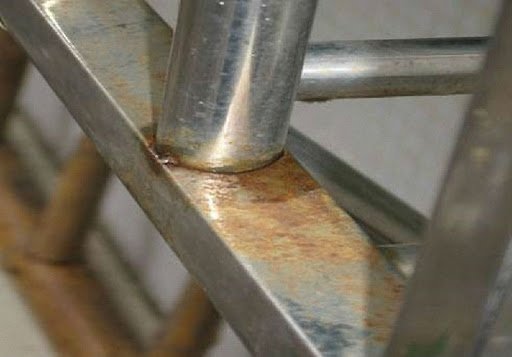
Stainless steel may still rust in environments such as:
So, stainless steel resists rust very well, but it does not mean it will never rust. Choosing the right alloy—such as 316 instead of 304—and keeping the surface clean can greatly improve its corrosion resistance.
In summary, stainless steel sculptures offer a combination of durability, aesthetic versatility, and practical benefits that make them a favored choice in contemporary sculpture for artistic expression and practical installations in public and private spaces.

 We only use the information provided above to contact you in relation to your inquiry. For further details, read our Privacy Policy.