

Lion statues have guarded palaces, museums, libraries, squares, and private entrances for centuries. Their meanings vary by place: civic power in Venice and London, remembrance in Lucerne, resilience in New York, and protection in Chinese architectural tradition.
This updated guide identifies the artist or maker, date, material, and present location of ten widely recognized lion sculptures and traditions. It also links to official city, museum, library, university, and corporate-history sources wherever those records are available.
Last reviewed: September 2026. Dates and attributions below distinguish between the designer, the carver or founder, and the institution that currently cares for the work.
| Statue or tradition | Artist / maker and date | Material | Current location or collection | Verified source |
|---|---|---|---|---|
| Marcian Lions, Vittorio Emanuele II Monument | Ettore Ferrari, 1887; cast by Alessandro Nelli | Bronze | Riva degli Schiavoni, Venice, Italy | City of Venice |
| Nelson’s Column Lions | Sir Edwin Landseer, installed 1867 | Bronze | Trafalgar Square, London, UK | London City Hall |
| Art Institute of Chicago Lions | Edward Kemeys, modeled 1893; unveiled 1894 | Bronze | Michigan Avenue entrance, Art Institute of Chicago, USA | Art Institute of Chicago |
| Guardian of Dreams Sleeping Lion | Mily Art carving team, contemporary | Natural marble | Made to order for private gardens and entrances | Mily Art product record |
| Chinese Guardian Lions | Anonymous architectural tradition; developed over centuries | Stone, bronze, ceramic, or wood | Palaces, temples, tombs, and entrances across China and beyond | Palace Museum |
| Lion of Lucerne | Designed by Bertel Thorvaldsen; inaugurated 1821 | Rock relief | Denkmalstrasse, Lucerne, Switzerland | Lucerne Tourism |
| Rex the Lion | Jon Hair, installed 2007 | Bronze | Queens Sports Complex at Marion Diehl Park, Charlotte, USA | Queens University |
| Lion of Venice | Ancient maker unknown; installed in Venice by about the 12th century | Bronze | Column in the Piazzetta San Marco, Venice, Italy | UNESCO Youth Committee |
| Patience and Fortitude | Modeled by Edward Clark Potter; carved by the Piccirilli Brothers, 1911 | Pink Tennessee marble | Stephen A. Schwarzman Building, New York Public Library, USA | New York Public Library |
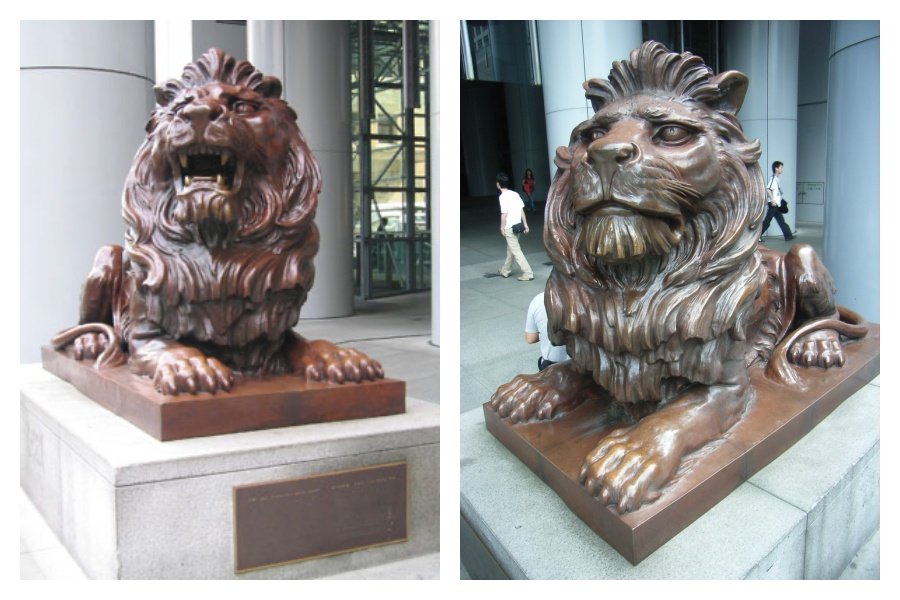
| HSBC Lions, Stephen and Stitt | William Wagstaff, 1935 Hong Kong pair | Bronze | HSBC Main Building, 1 Queen’s Road Central, Hong Kong | HSBC History |
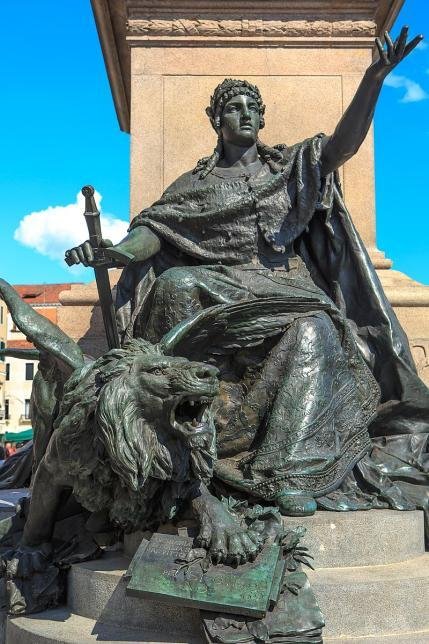
The monument on Riva degli Schiavoni was created by Roman sculptor Ettore Ferrari in 1887 and cast by Alessandro Nelli. Two allegorical groups at its base present Venice under Austrian rule and Venice after liberation. In one, the lion of Saint Mark bites the chains of captivity; in the other, a roaring lion tears at the 1815 Treaty of Vienna.
These are not simply decorative animals. The lions participate in the monument’s political narrative, turning Venice’s long-standing emblem into a symbol of resistance and recovered civic identity.
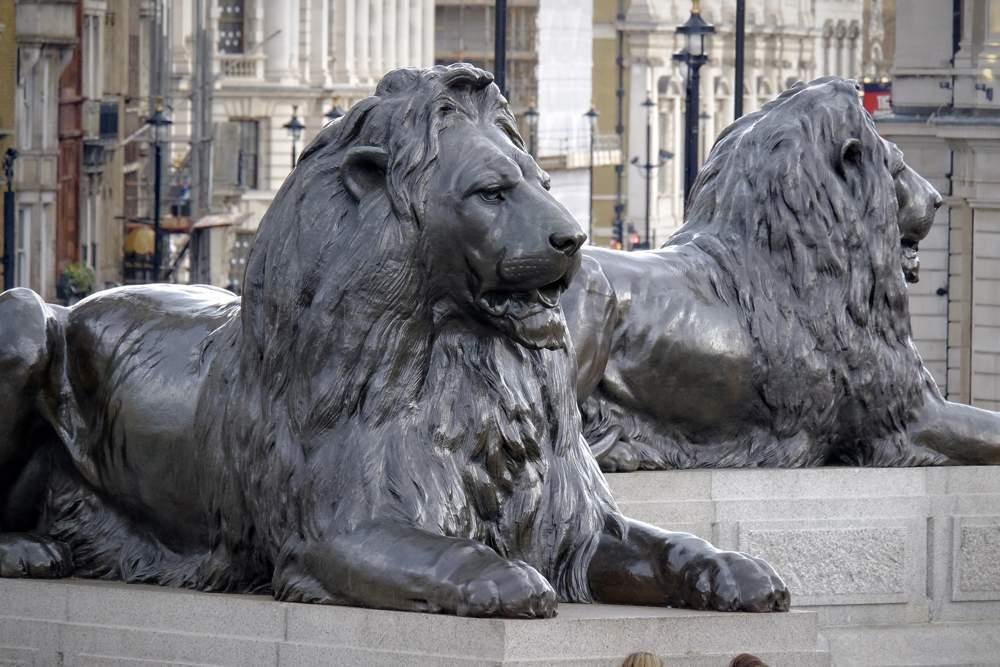
Four monumental bronze lions sit at the base of Nelson’s Column in Trafalgar Square. Sir Edwin Landseer designed them, and they were installed in 1867. Their low, watchful poses visually anchor the tall column and have become inseparable from the identity of the square.
London City Hall describes the lions as guardians of Nelson’s Column. They are often called Barbary lions, although the official record emphasizes Landseer’s authorship, their bronze material, and their role within the monument rather than assigning four separate symbolic names.
Edward Kemeys modeled the pair of bronze lions for the Michigan Avenue entrance of the Art Institute of Chicago. Created for the museum’s new building in the era of the 1893 World’s Columbian Exposition, they were unveiled in 1894 and have guarded the steps ever since.
Kemeys gave each lion a distinct attitude: the northern lion is described as being “on the prowl,” while the southern lion stands “in an attitude of defiance.” Together the pair weighs more than four tons, and their green patina has become part of their familiar appearance.

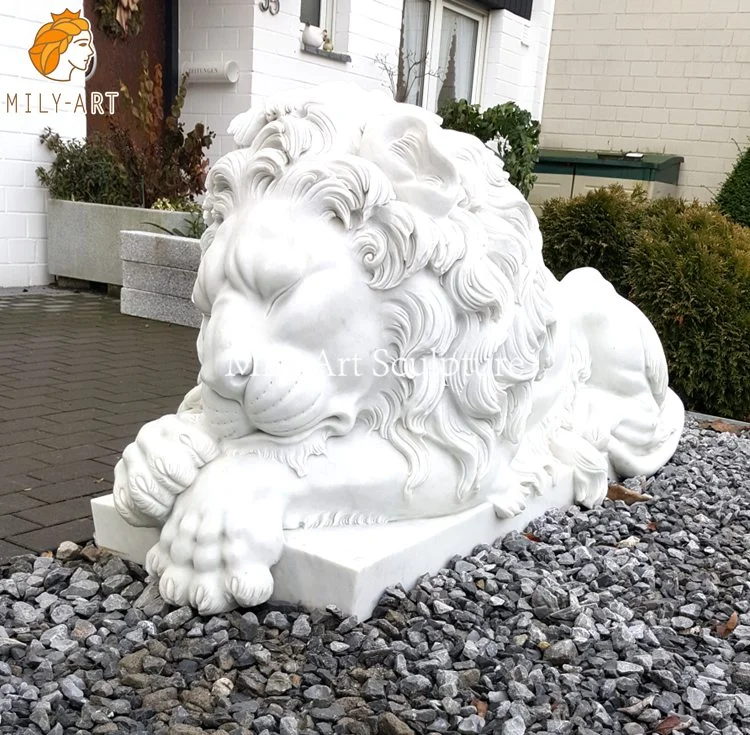
The Guardian of Dreams is a contemporary sleeping-lion design carved by Mily Art’s stone team rather than a historic public monument. Its calm pose offers a modern contrast to the alert guardians in London, Chicago, and Beijing. The sculpture is produced in natural marble and can be scaled for a garden, patio, or entrance project.
The work is included here as an example of how the guardian-lion idea continues in present-day craft: the symbolism of protection remains, but the animal is represented at rest rather than roaring or standing watch.
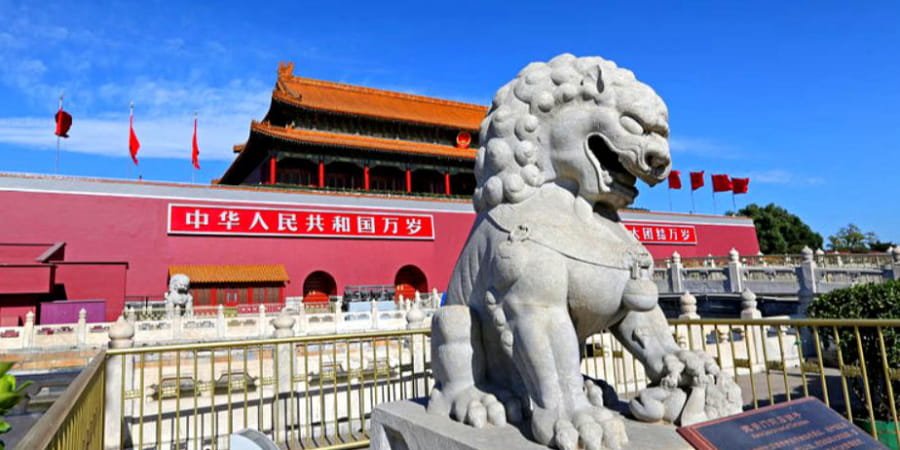
Chinese guardian lions are a sculptural tradition rather than a single artwork. Pairs have long appeared at imperial palaces, temples, tombs, government buildings, and important residences. In English they are sometimes called “foo dogs,” but they are stylized lions associated with authority, protection, and auspicious power.
The maker is usually anonymous, because the form developed through many workshops and dynasties. Materials vary by status and setting—from stone at monumental gateways to bronze, glazed ceramic, and carved wood. The pair normally works as an architectural unit, framing an entrance instead of functioning as an isolated museum object.
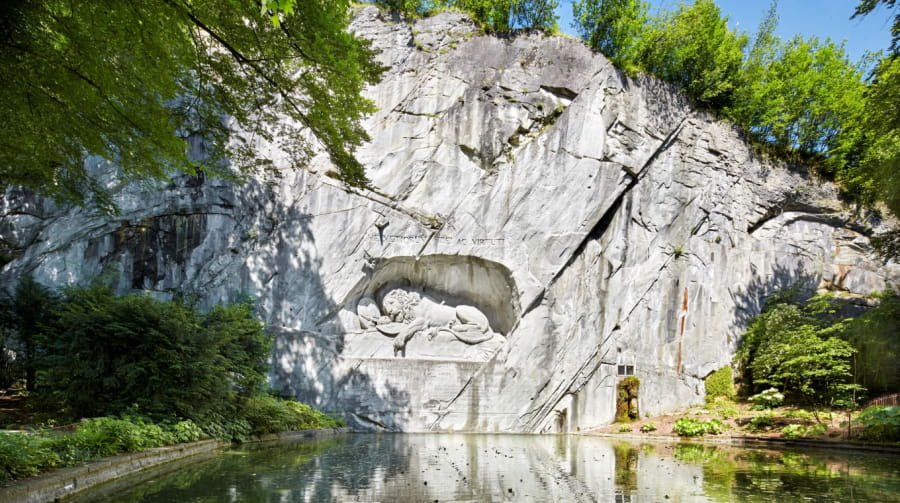
Designed by Danish sculptor Bertel Thorvaldsen and inaugurated in 1821, the Lion of Lucerne is carved directly into a rock face above a reflecting pool. The dying lion commemorates Swiss Guards killed while defending Louis XVI during the storming of the Tuileries Palace in Paris in 1792.
Unlike many triumphal lion monuments, this work centers grief and sacrifice. Its wounded body, broken spear, and shield create a memorial that feels intimate despite its monumental scale. The site remains publicly accessible in central Lucerne.
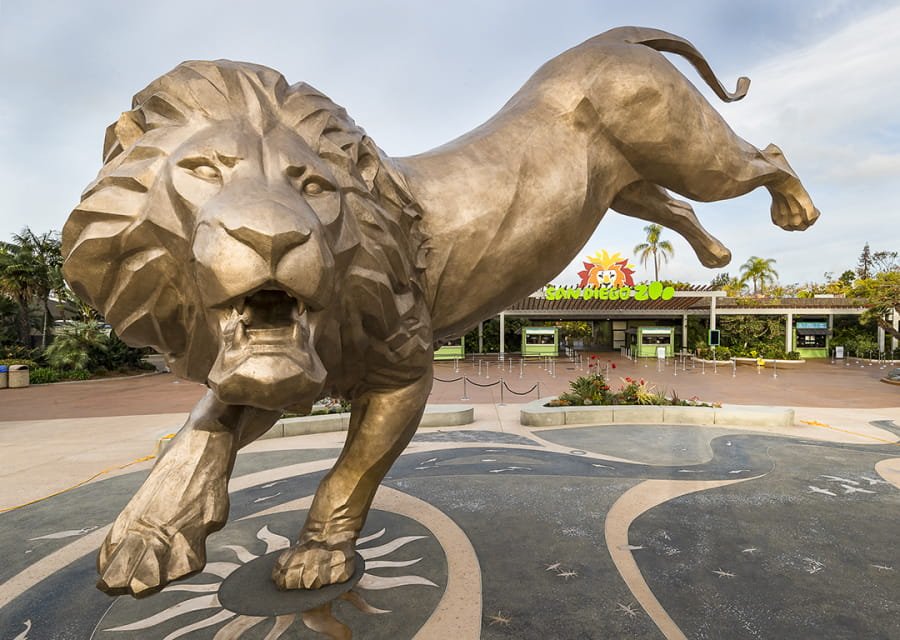
Rex is a monumental standing lion created by sculptor Jon Hair and installed in 2007. The bronze figure balances dynamically on one hind foot at the Queens Sports Complex in Marion Diehl Park, where it serves as a landmark for Queens University of Charlotte athletics.
Queens University describes Rex as the world’s largest standing lion sculpture. That institutional description is more precise than the broader and difficult-to-verify claim that it is the largest lion sculpture of any kind.
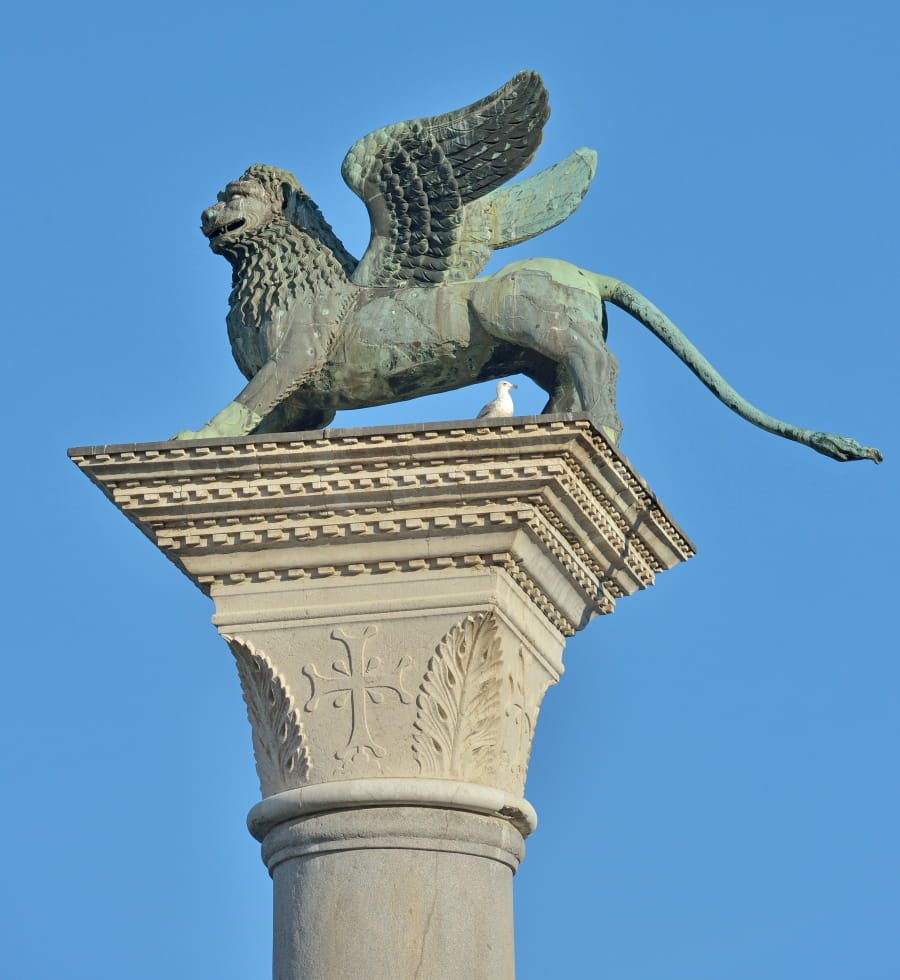
The ancient bronze Lion of Venice stands high above the Piazzetta San Marco on one of the two columns near the waterfront. Its original maker is unknown. The composite sculpture may have had a pre-Christian life before it was adapted as the winged lion of Saint Mark, patron saint and emblem of Venice.
The lion has occupied the column since roughly the 12th century, although it has been removed, transported, repaired, and reassembled several times. That layered history makes it both a civic symbol and a rare survival whose exact origin remains debated.
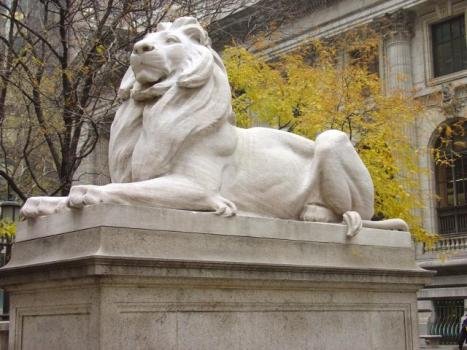
The two marble lions outside the Stephen A. Schwarzman Building on Fifth Avenue were modeled by animal sculptor Edward Clark Potter and carved by the Piccirilli Brothers. Made from pink Tennessee marble, they have flanked the library steps since the building was dedicated in 1911.
Their best-known names came later. During the Great Depression, Mayor Fiorello La Guardia called them Patience and Fortitude—qualities he believed New Yorkers needed. Patience sits south of the steps, while Fortitude guards the north side.
The bronze lions outside HSBC’s Hong Kong headquarters are known as Stephen and Stitt. The 1935 Hong Kong pair was designed by sculptor William Wagstaff after the molds for an earlier pair in Shanghai had been destroyed. Wagstaff oversaw the segmented casting and assembly process in Shanghai.
Stephen is shown roaring and conveys strength and protection; the calmer Stitt represents stability and security. Their names refer to HSBC managers, and the lions have become durable symbols of the bank’s history and of Hong Kong’s Central district.
Across very different cultures, lion sculpture repeatedly appears at thresholds: the base of a column, the steps of a museum or library, a palace gate, a financial headquarters, or the entrance to a private estate. The pose changes the message. Recumbent lions suggest controlled strength; roaring lions dramatize power; paired guardians create balance; and the wounded lion at Lucerne turns strength into sacrifice.
If you are comparing materials or poses for a private project, these three designs translate the guardian-lion tradition into customizable outdoor sculpture. This selection is placed after the editorial guide so it does not interrupt the landmark list.
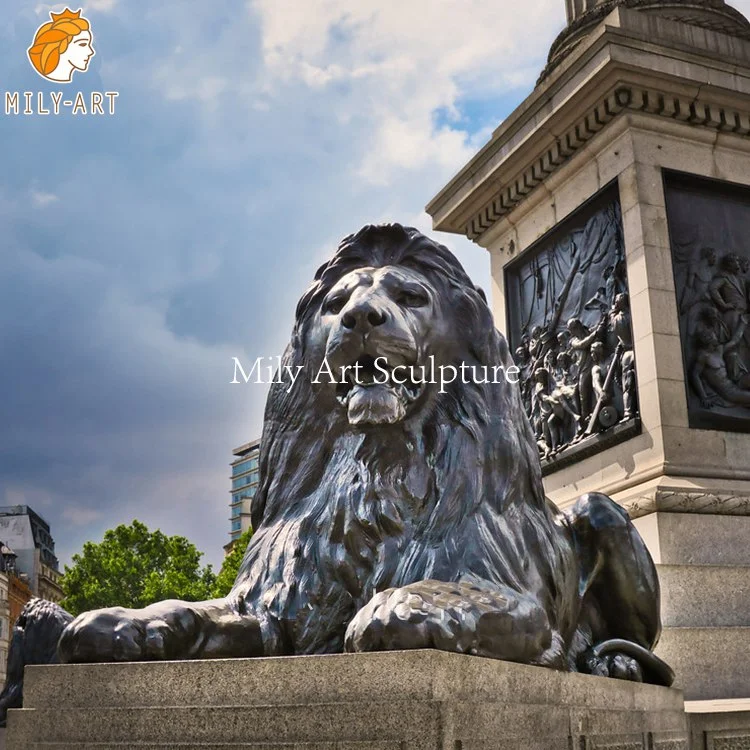
A naturalistic standing design for gates, gardens, and institutional entrances.
A calm, classical pose in natural stone for patios, lawns, and paired placements.
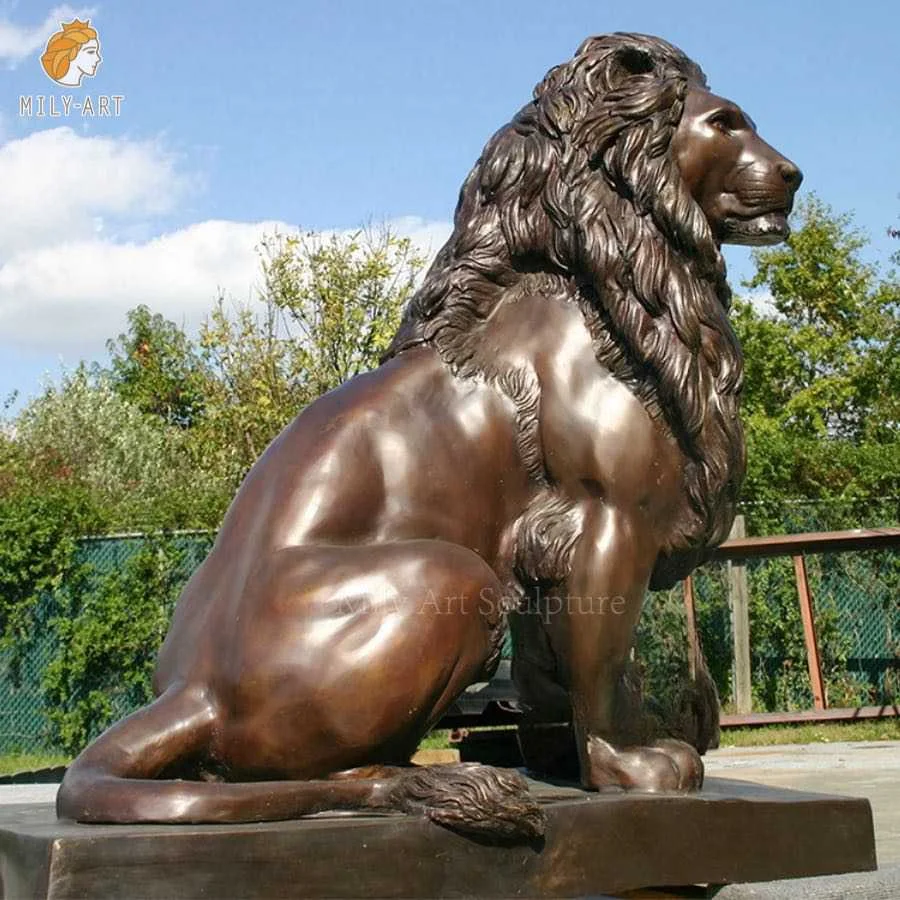
A symmetrical bronze pair designed to frame a driveway, villa, hotel, or estate gate.
Start with the installation setting, preferred material, approximate size, pose, and whether you need a single statue or a matched pair. For an accurate proposal, also share entrance dimensions, viewing distance, climate, and any reference images. Contact Mily Art for material recommendations, design confirmation, production details, and a project-specific quote.
A workshop can create a lion inspired by a historic pose or tradition, but an exact copy may involve copyright, trademark, cultural-property, or site-specific restrictions. A safer approach is to use the landmark as a visual reference and commission an original design adapted to your scale, material, and setting.

 We only use the information provided above to contact you in relation to your inquiry. For further details, read our Privacy Policy.
One Response
I want to get two Lions about 3ft tall and are going to be place at the entry of my house