

I may feel worried before I order a custom statue. One wrong likeness can turn a meaningful memory into a painful mistake.
I order a statue from my own photos by preparing clear reference photos, choosing material and size, confirming a clay model or 3D mock-up, approving revisions, then starting carving or casting. I do not treat it like a simple photo upload order.

I have worked with many private portrait and memorial sculpture requests at Mily Art Sculpture. I know this kind of order carries deep feeling. I am not only shaping stone or bronze. I am helping a client protect a face, a gesture, and a memory. This process needs patience from both sides.
A statue is not a flat photo. A photo gives me information, but sculpture asks me to understand form from every direction. I need to see the face, the head shape, the body proportion, the clothing, and the quiet feeling behind the person. I also need the client to tell me what matters most. Some families care most about the smile. Some care most about the calm posture. Some care most about the dignity of a memorial scene.
If I rush the early stage, the risk becomes larger later. If I confirm the face, pose, size, material, and use place step by step, the final statue has a much better chance to feel right.
I may think one beautiful front photo is enough. It is usually not enough, because sculpture needs shape, depth, posture, and character.
I prepare front, side, back, and close-up facial photos. I also add photos that show clothing, posture, expression, and personality, so the artist can understand the person in three-dimensional form.

When I make a custom statue from photos, I do not only copy the face from one angle. I need to build the whole person. A front photo may show the eyes and mouth clearly, but it may hide the nose depth, jaw line, ear shape, head angle, and shoulder shape. A side photo can tell me how the forehead, nose, lips, and chin connect. A back photo can help me understand hair, clothing, and body posture.
I also ask for close-up photos when the statue is a portrait or memorial figure. The eyes, mouth corners, and cheek lines often decide the feeling. I have seen cases where the client cared less about exact clothing and more about a soft smile. I have also seen clients focus on a certain hat, coat, or hand position. These details are not small when the statue is personal.
| Photo Type | Why I Need It | What It Helps Me Confirm |
|---|---|---|
| Front face photo | It shows the main likeness | Eyes, mouth, expression |
| Side face photo | It shows depth | Nose, chin, forehead, profile |
| Back photo | It shows hidden shape | Hair, clothing, posture |
| Full-body photo | It shows proportion | Height feeling, body balance |
| Close-up photo | It shows fine details | Wrinkles, smile, eye shape |
| Daily-life photo | It shows personality | Mood, habit, natural gesture |
I do not ask for many photos to make the process hard. I ask because I want the statue to feel more like the real person, not like a general figure with a familiar face.
I may feel nervous because I cannot see the final sculpture yet. This is why I use confirmation steps before real production.
I confirm likeness before production through a clay model, 3D mock-up, drawing, or detailed design review.1 I check proportion, pose, face, clothing, and feeling before carving marble or casting bronze.

The confirmation stage is the main risk-control stage. I see it as the moment when the client and artist meet in the same understanding. If I start carving marble too early, changes become difficult.2 If I start bronze casting too early, mold and casting work may need to be redone.3 That can increase cost and delay the project.
In my work, I usually guide the client to look at the model from several points. I do not only ask, “Do you like it?” That question is too general. I ask about face shape, head angle, eyes, mouth, shoulder line, clothing, and the total feeling. I also ask whether the statue feels calm, strong, warm, solemn, or gentle. A memorial statue often needs emotional accuracy, not only visual accuracy.
| Confirmation Point | What I Check | Why It Matters |
|---|---|---|
| Face proportion | Eye distance, nose length, mouth width | It affects likeness directly |
| Expression | Smile, calmness, seriousness | It affects emotional feeling |
| Head angle | Looking forward, down, or aside | It changes personality feeling |
| Body pose | Standing, sitting, hand position | It changes the story of the statue |
| Clothing | Folds, style, special items | It protects personal memory |
| Overall feeling | Dignity, warmth, peace | It decides whether the family accepts it |
I never treat this stage as a quick approval form. I treat it as the place where trust is built. The client knows the person better than I do. I know sculpture methods better than the client. When both sides speak clearly, the statue becomes much safer to produce.
I may hope the statue will look exactly like a photo. I understand that hope, but sculpture works in a different language.
I should not expect a 100% photographic copy. I should expect an artistic likeness that captures the face, character, posture, and memorial meaning through stone, bronze, or another sculptural material.

A photo freezes light on a flat surface. A statue exists in space.4 People see it from the front, side, back, and below. Sunlight also changes it during the day if it is placed outdoors.5 This means I must translate the photo into form. I must decide how deep to carve the eyes, how soft to make the mouth, how strong to show the cheekbone, and how much detail the material can hold.
Marble gives a quiet and noble feeling. Bronze gives strength, warmth, and long outdoor life.6 Stainless steel gives a modern and clean feeling, but it is not usually my first choice for a soft human memorial portrait.7 Each material changes the way likeness appears. A small marble bust may need less deep texture. A life-size bronze statue can carry more body movement and clothing detail.
| Material | Best Feeling | Likeness Style | Common Use |
|---|---|---|---|
| Marble | Pure, calm, classical | Soft and refined | Indoor halls, gardens, memorial spaces |
| Bronze | Strong, lasting, warm | Detailed and expressive | Outdoor memorials, estates, public spaces |
| Resin | Light and flexible | Good for model or budget needs | Indoor display, temporary use |
| Stainless steel | Modern, clean, bold | More abstract or stylized | Public art, modern villas |
I never promise a perfect photographic copy, because that would not be honest. I aim for a statue that the family can recognize with the heart and the eyes. For personal sculpture, that is the real goal.
I may want a fast price after sending photos. I understand that need, but photos alone cannot give a reliable custom statue quotation.
I share the use place, statue size, material choice, budget range, delivery date, and installation needs. These details affect carving method, casting process, structure, packing, shipping, and project timing.

A custom statue price depends on more than the person in the photo. A small marble bust and a life-size bronze statue are very different projects. A garden statue in a snowy climate also needs different planning from an indoor portrait in a private hall. If the statue is large, I may need internal structure, base design, lifting points, and stronger packing.8 If the delivery date is close, I need to check workshop schedule and shipping time with more care.
At Mily Art Sculpture, I often ask practical questions before I quote. I ask where the statue will stand. I ask whether it is indoor or outdoor. I ask the expected height. I ask if the client has a fixed budget. I ask whether the statue must arrive before a ceremony, opening, birthday, or memorial date. These questions protect the project.
| Detail I Share | Why It Affects Price | Example Question |
|---|---|---|
| Size | It changes material and labor | Do I need a bust or life-size figure? |
| Material | It changes process | Do I prefer marble or bronze? |
| Placement | It changes durability needs | Will it stand indoors or outdoors? |
| Deadline | It changes schedule planning | Must it arrive before a fixed date? |
| Base or pedestal | It changes structure and shipping | Do I need a matching stone base? |
| Delivery address | It changes packing and freight | Do I need door-to-door service? |
A clear quote is part of a serious custom process. I do not want the client to face surprise costs later. I prefer to discuss the full project early, even if it takes more time at the beginning.
I may choose material only by appearance. I should also think about weather, placement, size, maintenance, and the feeling I want.
I choose material by use place, style, durability, budget, and emotional tone. Marble feels calm and classical. Bronze feels strong and lasting. Other materials fit special design or budget needs.

When I stand in front of a block of marble, I feel its quiet nature. Marble is good for a peaceful portrait, a classical garden figure, or an indoor memorial bust. It can show calm beauty. It can also feel pure and respectful. Yet marble is heavy, and some stone types need care in harsh outdoor weather.9
Bronze has a different voice. It feels warm, deep, and permanent. It is a strong choice for outdoor statues, estate gardens, public memorials, and life-size figures. Bronze can hold detailed clothing, hair, and hand gestures well. Its patina can also match old gardens and classical architecture.10 For many memorial works, bronze gives a sense of time and dignity.
I also consider stainless steel, iron, or resin when the design needs them. I do not force one material on every project. I listen to the client’s space and purpose first.
| Project Need | Material I Often Consider | Reason |
|---|---|---|
| Indoor portrait bust | Marble or bronze | Both can show dignity and detail |
| Outdoor memorial figure | Bronze | It has strong weather resistance |
| Classical garden statue | Marble | It matches traditional landscape style |
| Modern art portrait | Stainless steel or bronze | It can show a clean or bold style |
| Budget-sensitive model | Resin | It can support study or display use |
| Estate entrance sculpture | Bronze or marble | Both give a high-end feeling |
A good material choice supports the memory. It should not fight with the place. It should make the statue feel natural in its final home.
I may say, “It does not look right,” when I feel worried. That feeling is real, but the artist needs clearer direction.
I give useful feedback by naming the exact issue. I point to the eyes, mouth, nose, head angle, body proportion, clothing detail, pose, or emotional tone.

Good feedback is specific. If I hear only “it does not look like him,” I know the client is unhappy, but I do not know what to change. If the client says, “The eyes look too sharp,” or “The smile is too wide,” I can respond much better. If the client says, “The head should lean slightly forward,” I can adjust the posture with a clear target.
I also remind clients that major direction changes after confirmation may affect cost and time. If we confirm a standing pose and later change it to a sitting pose, the sculpture may need a new model. If we confirm a calm expression and later change it to a broad smile, the face may need large rework. This is why I encourage careful feedback before final approval.
| Feedback Type | Less Helpful | More Helpful |
|---|---|---|
| Face | It looks wrong | The nose is too long |
| Expression | It feels strange | The smile is too strong |
| Pose | I do not like it | The shoulders should be more relaxed |
| Clothing | Change the clothes | The collar should be higher |
| Emotion | It has no feeling | I want a softer and warmer look |
| Proportion | The body is off | The head looks too large for the body |
I see revision as a shared conversation. I bring sculpture skill. The client brings memory. When both sides speak with care, the statue becomes closer to the person it is meant to honor.
I may focus on the artwork only. I should also protect timing, packing, shipping, and installation, especially for a memorial date or estate project.
I protect delivery by confirming the design early, allowing enough production time, reviewing progress photos, approving packing details, and planning shipping and installation before the statue leaves the workshop.
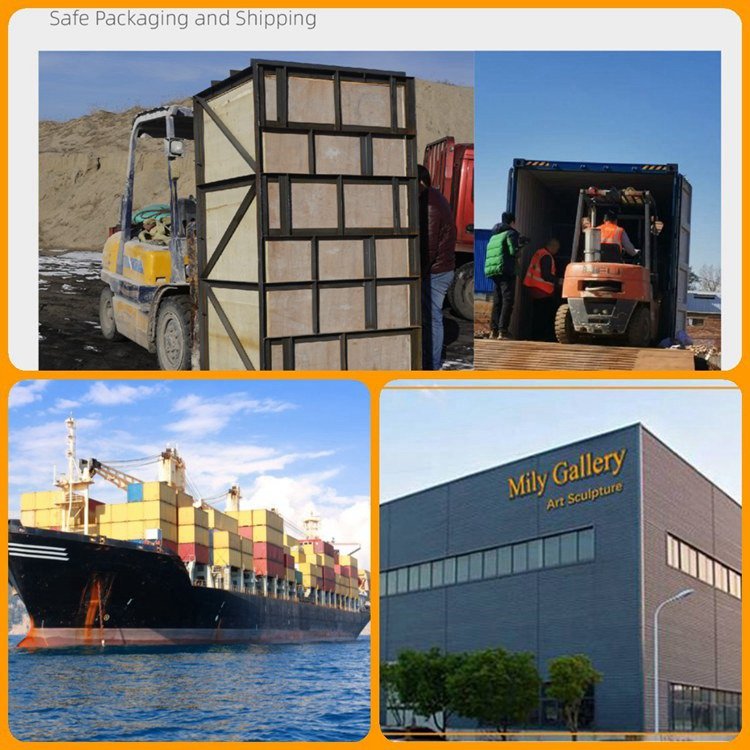
A custom statue cannot be made well by pressure alone. Marble carving needs careful handwork. Bronze casting needs modeling, mold making, wax work, casting, welding, chasing, patina, and inspection.11 Large sculptures also need structure checks, crate design, and shipping planning. If the client has a ceremony date, I need to know it at the first conversation.
At Mily Art Sculpture, I usually share photos and videos during production. I do this because the client may be far away in Europe, North America, the Middle East, Australia, Canada, or another region. Clear progress review helps reduce anxiety. It also gives the client a chance to notice details before shipment. Once the statue is packed and shipped, changes become much harder.
| Stage | What I Confirm | Why It Protects the Project |
|---|---|---|
| Before production | Design, size, material, deadline | It reduces later changes |
| During production | Face, pose, detail progress | It catches issues early |
| Before finishing | Surface, patina, polish | It confirms final look |
| Before packing | Photos, videos, crate plan | It avoids shipment surprises |
| Before delivery | Address, unloading, installation | It helps the statue arrive safely |
I believe safe delivery is part of the artwork. A beautiful statue still needs to arrive safely and stand correctly. That is why I treat packing, export, and installation guidance with the same respect as carving and casting.
I order a personal statue well when I share clear photos, confirm the model carefully, choose the right material, and give specific feedback with trust.
Bronze alloys exhibit exceptional longevity in outdoor environments due to the formation of a protective surface oxide layer that prevents deep structural corrosion. Evidence role: general_support; source type: product page. Supports: The durability and corrosion resistance of bronze in outdoor settings.
"Maquette - Wikipedia", https://en.wikipedia.org/wiki/Maquette. Maquettes and clay models have historically served as essential preparatory tools in sculpture to resolve proportional and spatial issues before executing the final work. Evidence role: historical_context; source type: encyclopedia. Supports: The historical and contemporary use of maquettes and models in sculpture.. Scope note: Focuses on traditional methods rather than modern digital 3D mock-ups. ↩
"How to Create Subtractive Soap Sculptures - The Art of Education", https://theartofeducation.edu/2018/04/how-to-create-subtractive-soap-sculptures/. Stone carving is inherently a subtractive process, meaning that once material is removed from the block, it cannot be replaced, requiring precise planning before execution. Evidence role: definition; source type: encyclopedia. Supports: The definition of stone carving as a subtractive process.. ↩
"Lost-wax casting - Wikipedia", https://en.wikipedia.org/wiki/Lost-wax_casting. The lost-wax casting process requires the destruction of the ceramic shell mold during casting, meaning any structural or design errors necessitate restarting the mold-making process from the beginning. Evidence role: mechanism; source type: paper. Supports: The complexity and sequential dependency of the bronze casting process.. ↩
"Depth Perception and the History of Three-Dimensional Art - PMC", https://pmc.ncbi.nlm.nih.gov/articles/PMC5298491/. Translating two-dimensional photographic references into three-dimensional space requires the artist to infer missing depth cues and volumetric data that are flattened by the camera lens. Evidence role: mechanism; source type: paper. Supports: The cognitive and technical challenges of translating 2D images into 3D forms.. ↩
"Distinct processes of lighting priors for lightness and 3-D shape ...", https://pmc.ncbi.nlm.nih.gov/articles/PMC8212428/. The perception of outdoor sculpture is highly dependent on diurnal lighting variations, as shifting solar angles continuously alter the shadows and highlights that define the object's volume. Evidence role: mechanism; source type: paper. Supports: The interaction between natural light and three-dimensional sculptural forms.. ↩
"Bronze Sculpture Collection - Mily Statue", https://www.milystatue.com/product-category/bronze-sculpture/. ↩
"Stainless Steel Sculpture", https://www.milystatue.com/product-category/stainless-steel-sculpture/. Since its introduction to sculpture in the 20th century, stainless steel has been predominantly utilized for abstract, monumental, and modernist works due to its high tensile strength and reflective surface. Evidence role: historical_context; source type: paper. Supports: The historical and contemporary use of stainless steel in sculpture.. ↩
"Armature (sculpture) - Wikipedia", https://en.wikipedia.org/wiki/Armature_(sculpture). Monumental sculptures require engineered internal armatures to withstand wind loads and seismic activity, as well as integrated lifting points to facilitate safe transportation and installation. Evidence role: mechanism; source type: paper. Supports: The structural requirements for large-scale sculptures.. ↩
"Calcium carbonate - Wikipedia", https://en.wikipedia.org/wiki/Calcium_carbonate. Marble, composed primarily of calcium carbonate, is highly vulnerable to chemical weathering from acid rain and physical degradation from freeze-thaw cycles in outdoor environments. Evidence role: mechanism; source type: institution. Supports: The susceptibility of marble to environmental weathering.. ↩
"[PDF] Patina: How Time Is Forged", https://web.colby.edu/copiesfakesforgeries/files/2021/05/MULLER.pdf. The natural patination of bronze involves the oxidation of copper to form copper carbonates and sulfates, creating a stable, aesthetically pleasing surface that integrates well into landscape environments. Evidence role: mechanism; source type: research. Supports: The chemical formation and aesthetic characteristics of bronze patina.. Scope note: Does not address artificially applied chemical patinas. ↩
"Lost-wax casting - Wikipedia", https://en.wikipedia.org/wiki/Lost-wax_casting. The traditional lost-wax (cire perdue) casting method is a multi-step process that includes creating a positive wax model, investing it in a ceramic shell, burning out the wax, pouring molten bronze, and finally welding and chasing the metal. Evidence role: mechanism; source type: institution. Supports: The sequential steps involved in the lost-wax bronze casting process.. ↩

 We only use the information provided above to contact you in relation to your inquiry. For further details, read our Privacy Policy.