

When I was young, I studied sculpture with my parents. One thing caught my attention very early: a sculpted body can tell a story without saying a word. A strong shoulder may suggest power. A twisted waist may show movement. Tight muscles can express pain, while a relaxed pose can show confidence.
This is why muscular Greek statues still attract so much attention. They are not simply ancient versions of modern bodybuilders. Their bodies were designed to show ideas such as strength, courage, balance, discipline, struggle, and even exhaustion.
In this guide, I will introduce ten famous muscular Greek statues and explain what makes each one special. I will also answer two common questions: Why are Greek statues so muscular, and did ancient Greek men really look like them?
Quick answer: Greek statues look muscular because ancient artists often used the ideal male body as a symbol. The muscles showed physical strength, self-control, heroic character, or divine power. Some athletes were certainly well trained, but most statues were idealized works of art, not exact portraits of average people.
Before we begin, it is important to understand the term “Greek statue.” Some works below are surviving Greek bronzes. Others are Roman marble versions of famous Greek designs whose original bronze statues are now lost.
| Statue | Approximate Date | Material or Surviving Form | Original or Copy? | Main Meaning of the Body |
|---|---|---|---|---|
| Farnese Hercules | Roman period | Marble | Ancient version of a Greek statue type | Great strength and deep exhaustion |
| Belvedere Torso | 1st century BCE | Marble | Ancient work inspired by an earlier bronze | Compressed power and inner tension |
| Doryphoros | Greek design around 440 BCE | Roman marble versions survive | Copy of a lost Greek bronze | Balance, order, and ideal proportion |
| Discobolus | Greek design around 460–450 BCE | Roman marble versions survive | Copy of a lost Greek bronze | Controlled movement and athletic focus |
| Riace Bronzes | Around 460–450 BCE | Bronze | Greek originals | Confident and ideal warrior bodies |
| Artemision Bronze | Around 460 BCE | Bronze | Greek original | Explosive power before action |
| Laocoön and His Sons | Around 40–30 BCE | Marble | Ancient sculptural group | Pain, resistance, and physical struggle |
| Borghese Gladiator | Around 100 BCE | Marble | Ancient Greek work | Speed, defense, and combat tension |
| Boxer at Rest | Hellenistic period | Bronze | Greek original | Strength damaged by age and injury |
| Dying Gaul | Around 60–40 BCE | Marble | Replica of an earlier Hellenistic work | Courage, pain, and defeat |
Ancient Greek artists were deeply interested in the human body. They studied how a person stands, moves, carries weight, and reacts under pressure. However, they did not always try to copy one real person exactly. They often improved, balanced, or exaggerated the body to express an idea.
For the ancient Greeks, a beautiful and trained body could suggest more than physical fitness. It could represent discipline, courage, youth, heroic status, or closeness to the gods. The Getty Museum explains that the ideal male image in Greek art was often youthful, toned, and free from signs of age.
The type of muscle also changes from statue to statue. Doryphoros has a calm and balanced body. Discobolus shows an athlete during a difficult movement. Farnese Hercules has massive muscles but looks tired. Laocoön uses muscle to show pain and desperate resistance.
When I look at these works, I do not see one repeated “muscular style.” I see several different ways of using the body to tell a story.
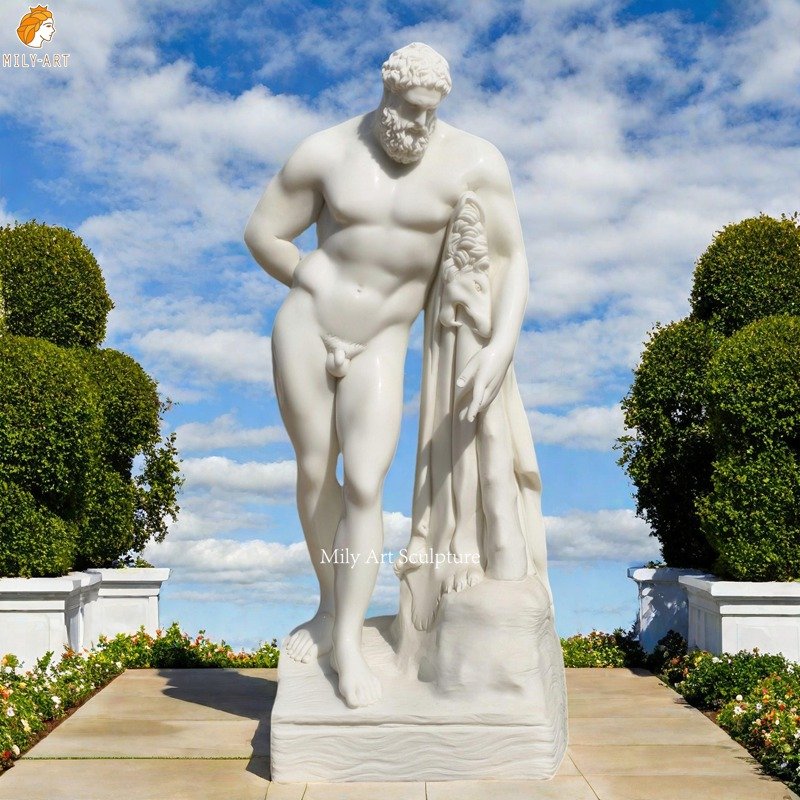
Hercules leans on his club, which is covered by the skin of the Nemean Lion. His right hand is hidden behind his back and holds the apples of the Hesperides. These details connect the sculpture to his famous labors. His lowered head and heavy posture make him look tired after completing an almost impossible task.
This contrast gives the sculpture its emotional power. Hercules has a body beyond normal human limits, but even he needs to rest. His muscles express strength, while his pose expresses the cost of using that strength.
The marble sculpture was found at the Baths of Caracalla in Rome in 1546. It carries the signature of Glykon of Athens and is now in the National Archaeological Museum of Naples. The museum’s Farnese Hercules guide explains its discovery and signature.
Because Mily has reproduced this famous figure, I often study how the large muscle groups connect instead of looking at each muscle alone. On a good Farnese Hercules marble replica, the back, waist, supporting leg, and resting arm must all work together. If one area is carved without considering the pose, the figure can look stiff rather than powerful.
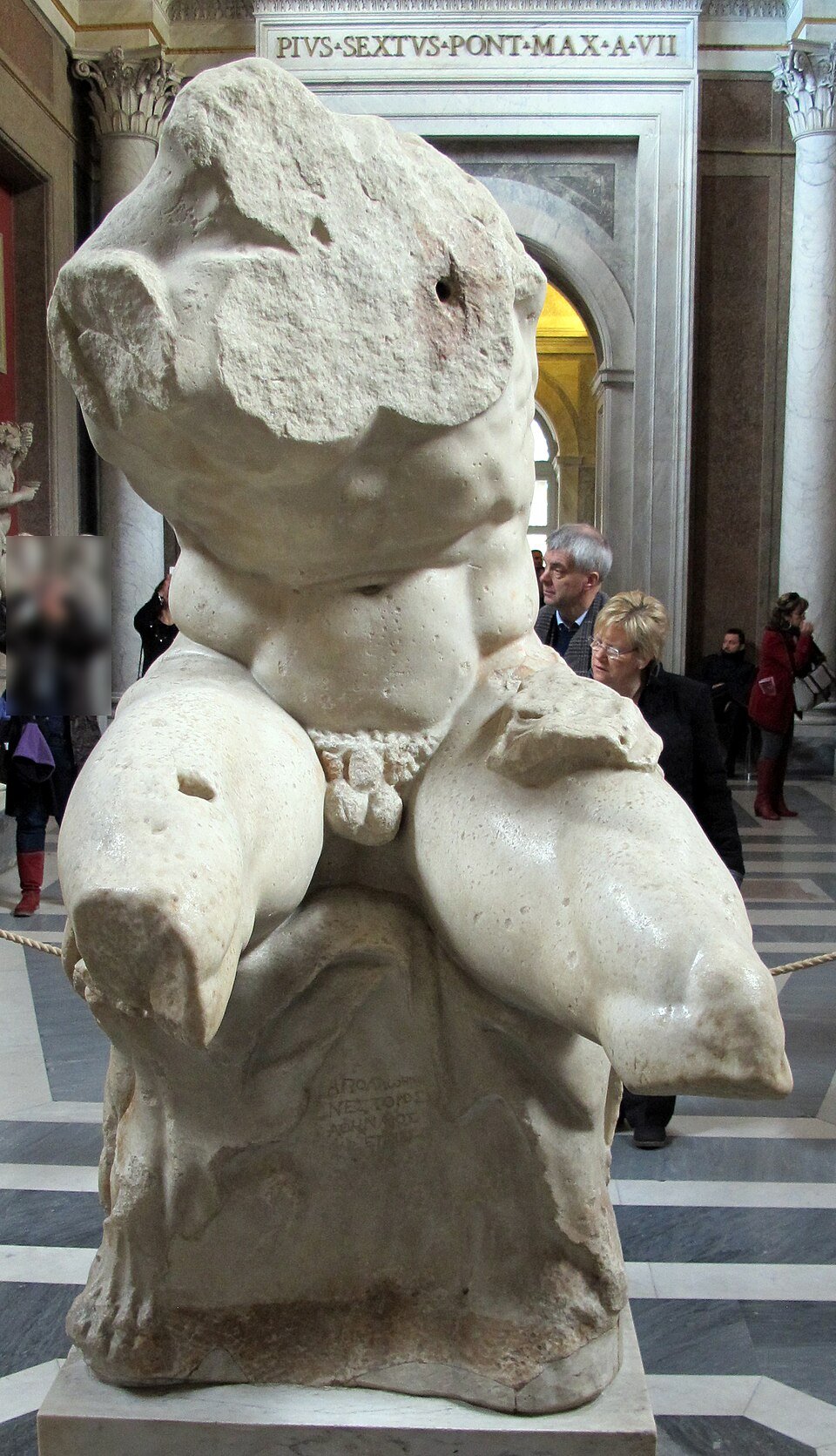
The Belvedere Torso has no head, lower legs, or complete arms. Even so, it became one of the most admired ancient sculptures in Western art.
The figure sits with the upper body turned to one side. The chest, abdomen, and back respond to this twist. One side of the torso is compressed, while the other opens and stretches. This makes the body feel alive, even though so much of the statue is missing.
The identity of the figure is not completely certain. The Vatican Museums currently present Ajax, the Greek hero who considered taking his own life, as the most accepted interpretation. The marble dates to the first century BCE, is signed by Apollonios of Athens, and was probably inspired by an earlier bronze.
This uncertainty should not be hidden. In my view, it makes the sculpture more interesting. We cannot depend on a face or a complete action. We have to read the story through the position of the body.
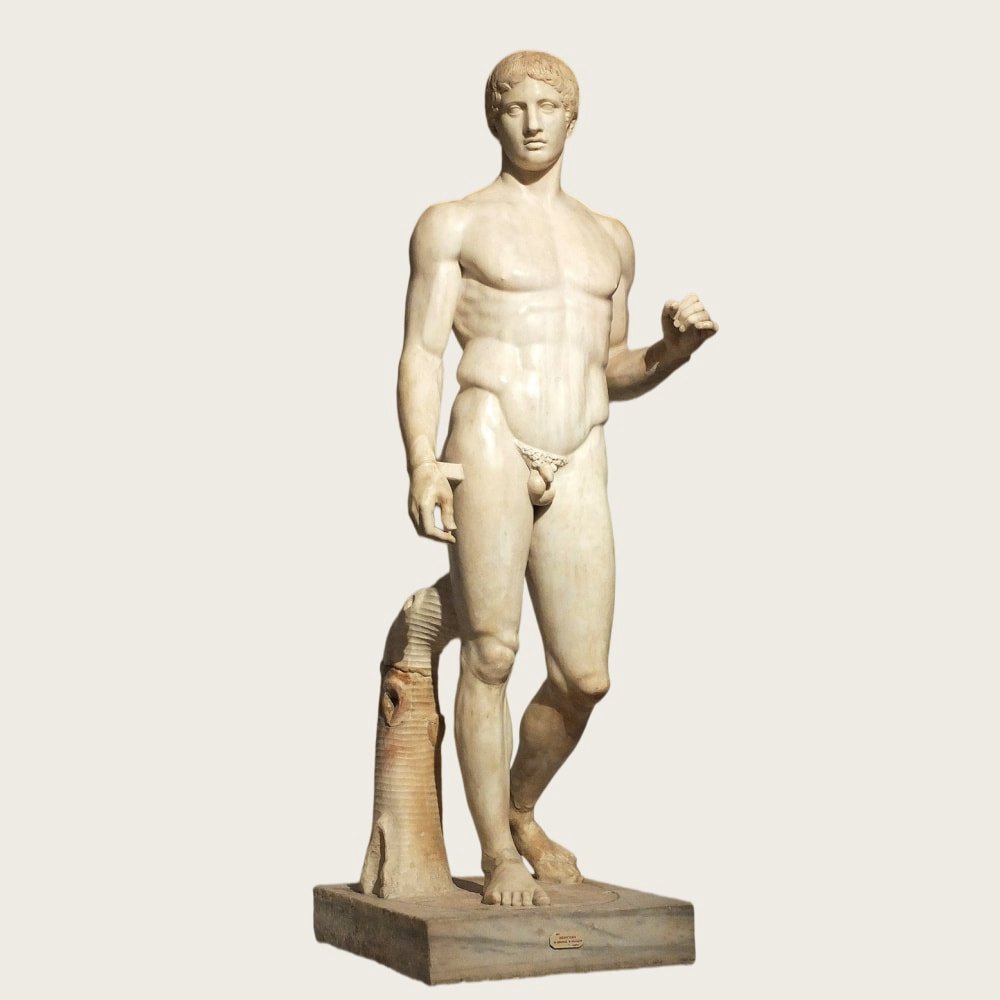
This figure is muscular, but not in the same way as Farnese Hercules. His body is controlled and balanced. One leg carries the weight, while the other relaxes. One side of the upper body responds to the position of the legs. This creates a natural standing pose known as contrapposto.
Polykleitos was interested in ideal proportion. For him, beauty came from the relationship between all parts of the body. The shoulders could not be judged without the waist, and the torso could not be separated from the legs.
That is an important lesson for anyone looking at a marble figure today. Bigger muscles do not automatically make a better sculpture. Good anatomy depends on proportion, weight, and balance.
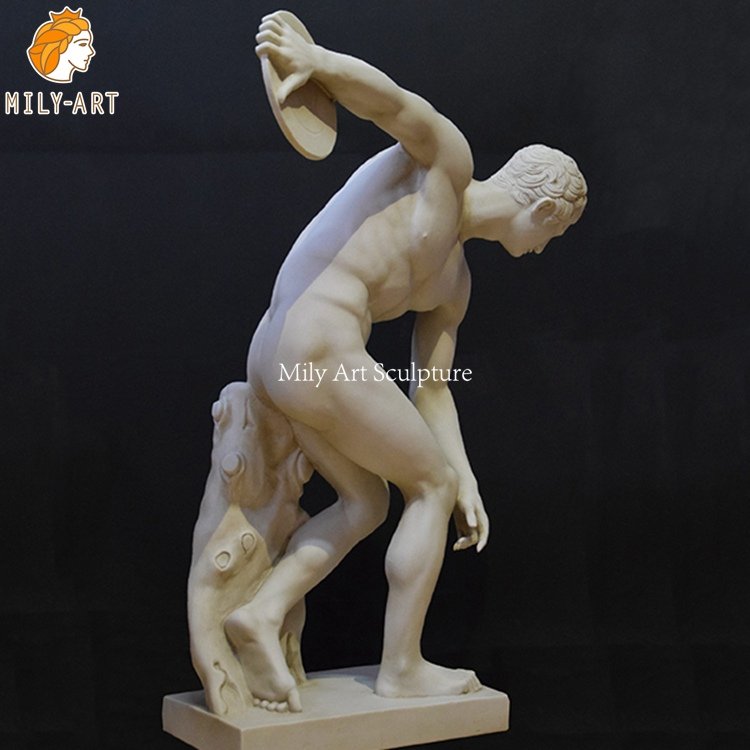
The original Greek bronze by Myron, made around 460–450 BCE, no longer survives. Today, the design is known through Roman marble copies. The British Museum’s Townley Discobolus is one well-known example.
The figure’s muscles are not large simply to make him look strong. They help us understand the direction of the movement. The abdomen turns, the back controls the rotation, and the legs prepare to push against the ground.
The face appears calm, even though the body is under pressure. This combination of physical action and mental control reflects an important Greek ideal.
Mily has created a hand-carved marble Discobolus replica. For a sculpture like this, I pay special attention to the overall silhouette. The statue should look balanced from several directions, not only from the front.
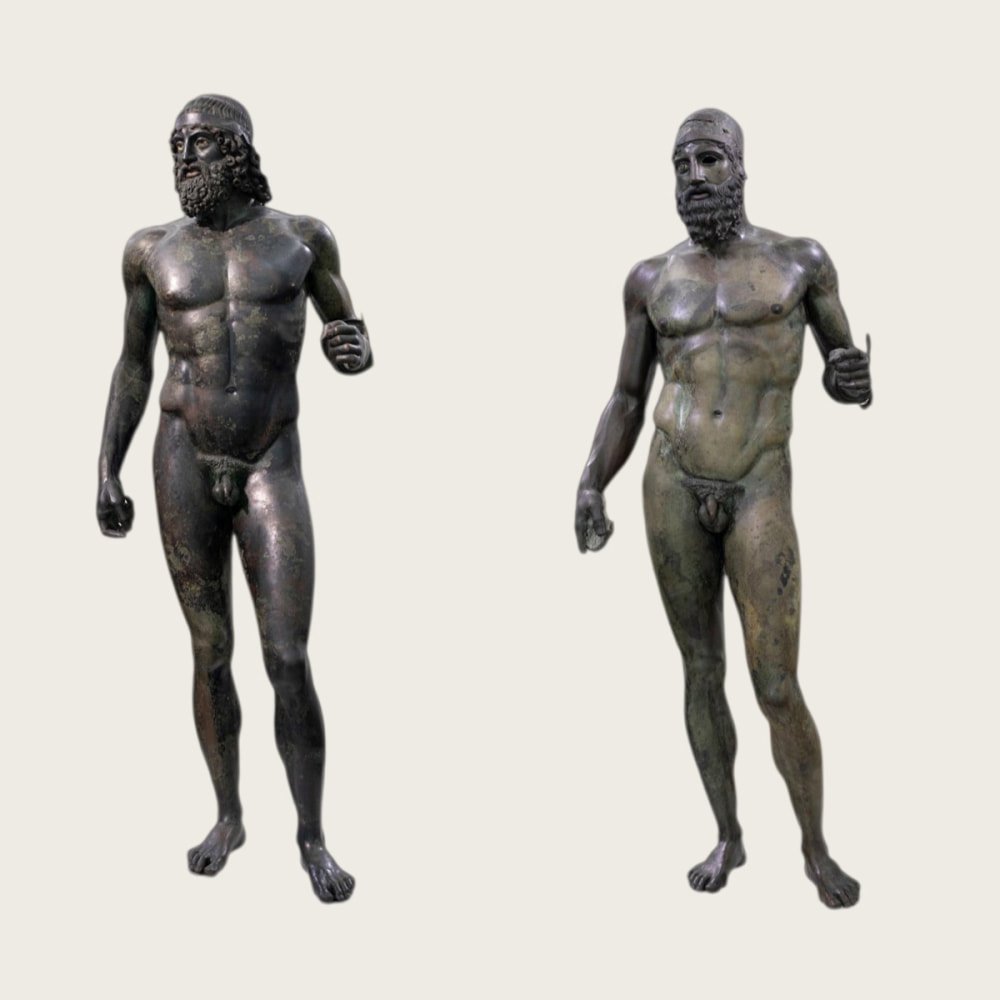
Both figures appear confident and alert. Their shoulders are broad, their waists are narrow, and their bodies are carefully balanced. They probably represented warriors, although their exact identities remain uncertain.
Bronze gave the artists more freedom than marble. A bronze figure could extend its arms without needing the same heavy supports often seen in marble copies. The material also allowed very fine surface details and the addition of other metals for features such as lips, teeth, and eyes.
The muscles of the Riace figures feel strong but controlled. These are not tired heroes or wounded fighters. They appear ready, aware, and fully in command of their bodies.
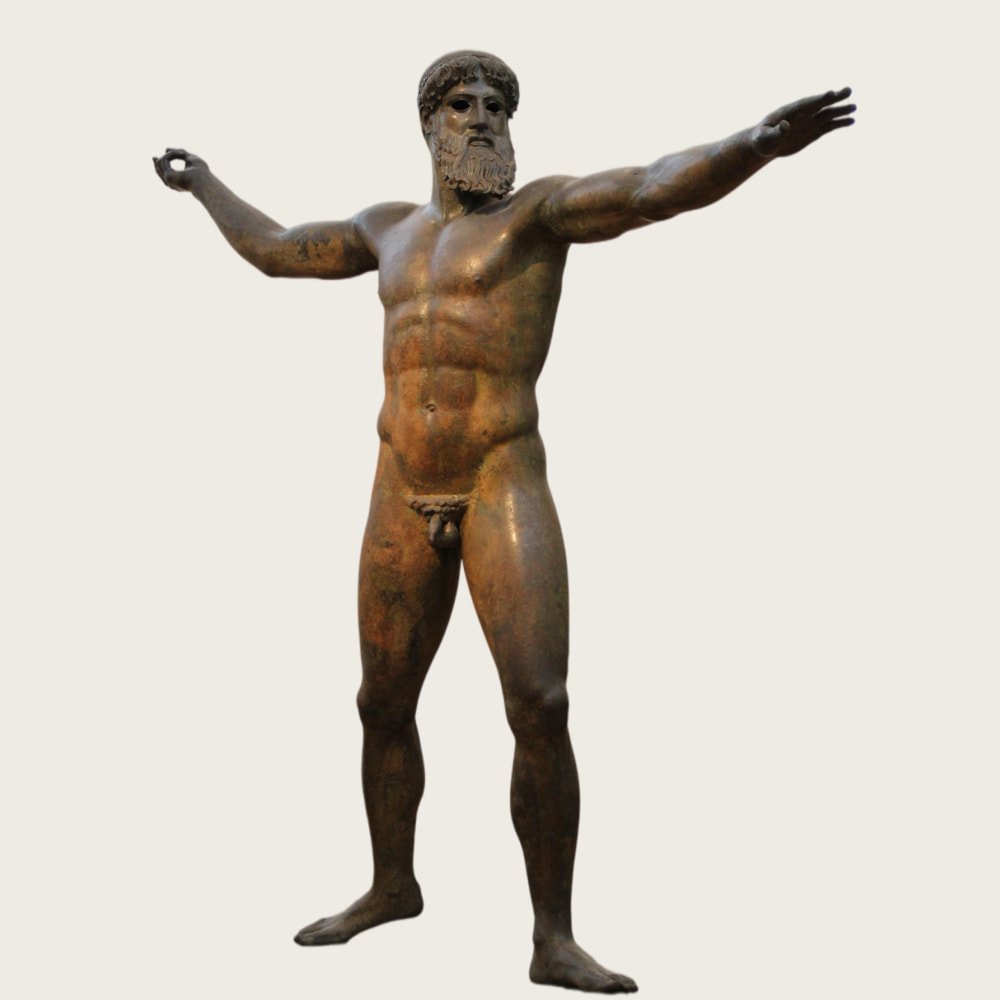
The figure stands with both arms spread wide. One arm points toward the target, while the other once held a weapon. The object is missing, so the figure may be Zeus preparing to throw a thunderbolt or Poseidon preparing to throw a trident. The correct identity is still debated.
The National Archaeological Museum in Athens therefore describes it as Zeus or Poseidon. A careful article should keep both possibilities instead of presenting one name as certain.
The body is leaner than Farnese Hercules, but it contains enormous energy. The wide arms, turned torso, and firmly placed legs capture the moment just before the throw. The power comes from the whole pose, not from the size of one muscle.

Laocoön’s body twists as he tries to escape. His chest rises, his abdomen tightens, and every arm and leg seems to pull in a different direction. Here, muscle does not represent calm perfection. It shows resistance, fear, and terrible pain.
The group was found in Rome in 1506. The Vatican Museums date it to around 40–30 BCE and connect it with the Rhodian sculptors mentioned by Pliny the Elder.
This is also one of the most difficult classical groups to reproduce. A sculptor must understand three bodies, the spaces between them, and the long curves of the snakes. The expressions must match the tension in the bodies.
Mily offers both a marble Laocoön and His Sons statue and a bronze version of the group. The two materials create different visual effects. Marble highlights light, shadow, and carved detail. Bronze gives the complex movement a darker and heavier appearance.
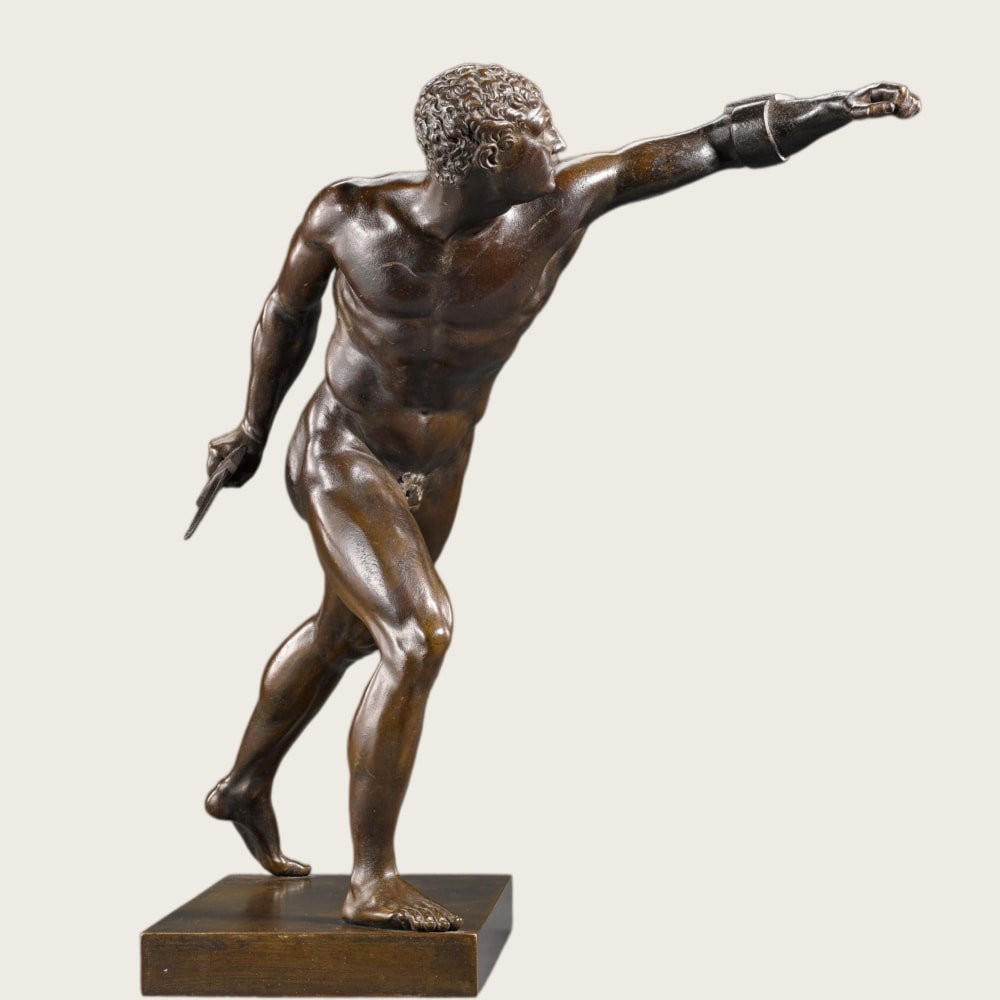
The Borghese Gladiator has been known by this name for centuries, but the figure was probably not a gladiator. He is more likely a warrior fighting an opponent on horseback.
The statue is signed by Agasias of Ephesos and is usually dated to around 100 BCE. It is now in the Louvre.
The warrior leans far forward. One arm once held a shield, while the other probably carried a sword. His long stance creates a strong diagonal line. The muscles of the chest, waist, and legs show the effort needed to attack and defend at the same time.
This sculpture is a useful reminder that names given in later centuries are not always historically exact. When I introduce a famous work, I prefer to explain what is known and what remains uncertain.
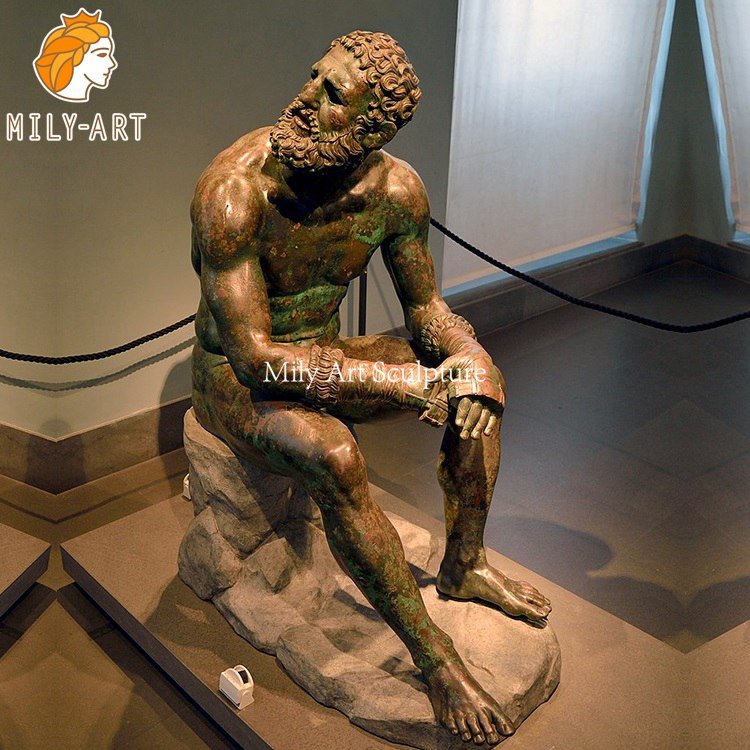
The Boxer at Rest presents a very different kind of muscular man. He is strong, but he is not untouched or perfect. He is seated after a fight, with swollen ears, a damaged face, and visible wounds.
The artist used red copper to show blood on the bronze body. According to the National Roman Museum, the work combines powerful physical form with the direct realism of an injured boxer.
His head suddenly turns upward, as if someone has spoken to him. This small action makes the figure feel deeply human. We do not only see an athlete’s body. We see his age, effort, pain, and experience.
For me, this is one of the most moving muscular Greek sculptures. It shows that strength does not mean a person can never be hurt.
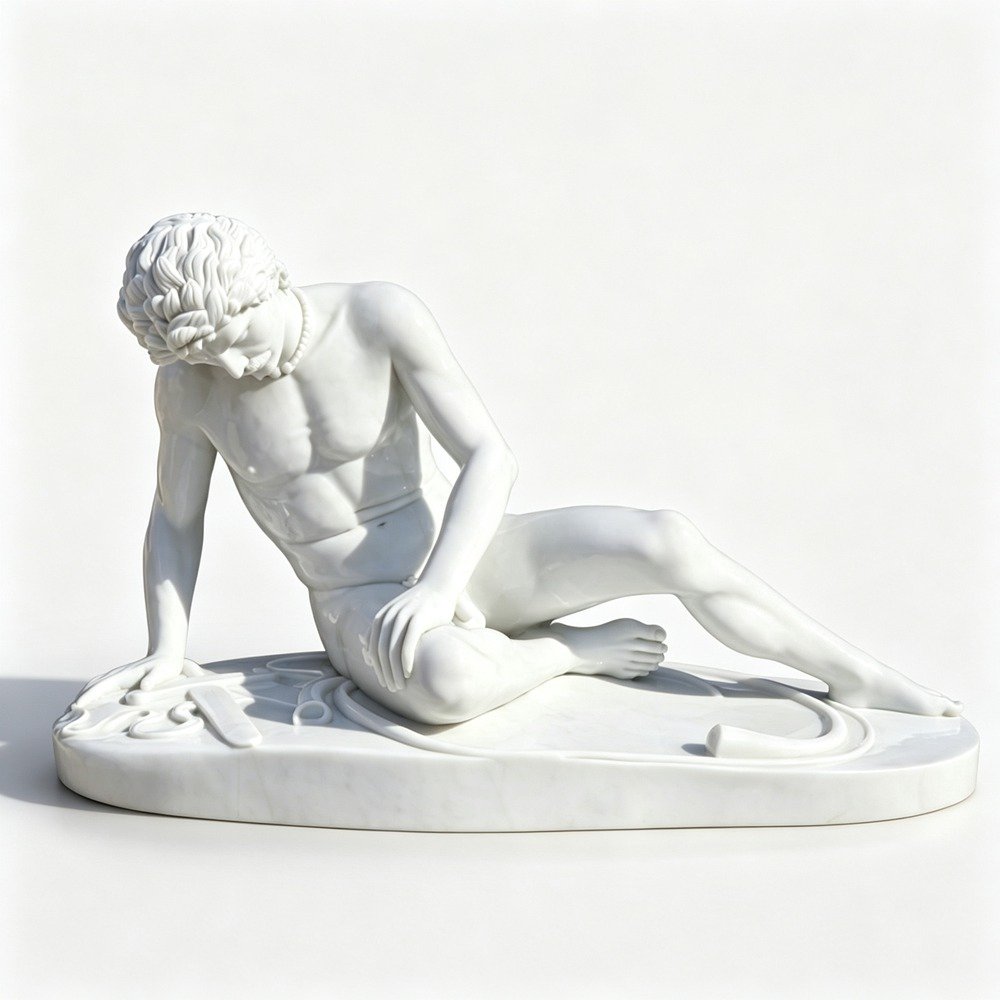
The Dying Gaul shows a wounded Celtic warrior supporting himself with one arm. His strong body is slowly losing its power. His lowered head and bent position make the scene quiet but painful.
The figure can be identified as a Gaul through details such as his hair, moustache, neck ring, and weapons. The Capitoline Museums date the surviving marble to around 60–40 BCE and describe it as a replica connected to an earlier victory monument from Pergamon.
The sculptor did not present the defeated enemy as weak or ridiculous. Instead, the warrior remains brave and physically impressive. His strong body makes his defeat more tragic.
This statue uses muscle to express dignity. It tells us that the human body in ancient sculpture could honor even a fallen enemy.
Some ancient Greeks were certainly very fit. Athletes trained for running, wrestling, boxing, discus throwing, and other events. Soldiers also needed strength and endurance. However, it would be a mistake to assume that the average Greek man looked like Hercules or the Riace warriors.
Most famous statues were not simple records of ordinary bodies. Artists selected, balanced, and sometimes exaggerated physical features. A sculpture of a god or hero needed to look greater than a normal person. Even statues of athletes often expressed an ideal rather than one completely realistic body.
Farnese Hercules is an especially clear example. Hercules is a superhuman hero. His enormous body helps the viewer understand his legendary power before learning anything else about him.
So the best short answer is this: trained athletes existed, but muscular Greek statues show artistic ideals as much as real anatomy.
From studying sculpture, I have learned that convincing strength comes from structure. Deep lines alone cannot create a powerful body.
Sculptors need to consider several things:
Doryphoros looks strong because his body is balanced. Discobolus looks strong because his whole body controls one movement. Laocoön looks strong because we can see him fight against the snakes. The Boxer at Rest looks strong because his damaged body still carries the history of many fights.
This is why accurate anatomy is more than copying visible muscles. The body must make sense as one complete form.
Many people are surprised to learn that some famous “Greek statues” are Roman marble copies.
Ancient Greek sculptors created many important statues in bronze. Over time, a large number of those bronzes were lost, melted down, or destroyed. Roman collectors admired Greek art, so Roman workshops produced marble copies and adaptations of well-known Greek designs.
The Metropolitan Museum of Art explains that Roman artists made both close copies and versions adjusted to the needs of Roman patrons.
This is why we should describe each object carefully:
Calling all of them “Greek originals” would be inaccurate. However, they all help us understand how Greek ideas about the body influenced ancient art.
A muscular statue can become the visual center of a garden, hall, hotel, club, gym, or private collection. Before choosing one, I suggest thinking about its meaning as well as its appearance.
Fine details matter at close range. A large outdoor statue needs a strong silhouette and deeper forms so that the body remains clear from a distance. The pedestal also changes how viewers see the chest, face, and movement.
White marble reflects light and makes the body look clean and classical. Bronze creates deeper shadows and often feels heavier or more dramatic. Both materials can work indoors or outdoors when they are produced and maintained correctly.
A life-size figure can work well near an entrance or along a garden path. A larger-than-life Hercules may need an open lawn, a tall hall, or a wide courtyard. Always consider the statue, pedestal, surrounding architecture, and empty space as one complete design.
You can view more examples in Mily’s marble Greek statue collection.
I began learning about sculpture from my parents when I was young. That experience taught me to look beyond the polished surface.
When I review a muscular marble figure, I first look at the total pose. I ask whether the body feels balanced and whether the movement is clear. Then I look at the major relationships: shoulders and hips, chest and abdomen, supporting leg and relaxed leg.
After that, I pay attention to smaller forms. The edges should not all be equally hard. Some muscles need a clear line, while others should flow softly into the next area. Hair, skin, cloth, a club, or a lion skin should also have different textures.
The final test is to view the statue from several directions and under different light. A figure that looks correct only from the front is not fully successful. A strong classical statue should have a clear rhythm as the viewer walks around it.
This careful observation is especially important for Farnese Hercules, Discobolus, and Laocoön. Their power comes from the relationship between anatomy, movement, and story.
Farnese Hercules is often considered one of the most muscular statues in the classical tradition. Its massive chest, back, arms, and legs present Hercules as a superhuman hero. At the same time, his resting pose shows exhaustion.
Many Greek statues represent gods, heroes, warriors, or ideal athletes. Their bodies were designed to express strength, discipline, beauty, or divine status. They were not intended to represent the body of every ordinary person.
Ancient Greek athletes and soldiers could be very fit, but ordinary people had many different body types. Famous statues usually present an idealized body rather than an average one.
Heroic nudity allowed ancient artists to show the full body and connect physical beauty with ideas such as courage, youth, athletic success, and heroic character. Nudity in Greek art had cultural meanings that were different from modern everyday nudity.
Their original Greek bronze versions are lost. The best-known surviving examples are Roman marble copies or adaptations. These later works preserve the basic designs and poses of the Greek originals.
No final answer is accepted by everyone. The missing object in the raised hand could have been Zeus’s thunderbolt or Poseidon’s trident. It is safest to call the figure the Artemision Bronze, Zeus, or Poseidon.
Farnese Hercules works well as a strong focal point in a large classical garden. Discobolus suits sports, school, and active outdoor spaces. Poseidon is a natural choice near a pool or fountain. The best choice depends on the available space, viewing distance, material, and meaning you want to express.
Muscular Greek statues are memorable because their bodies communicate ideas immediately. Doryphoros shows balance. Discobolus shows controlled action. Farnese Hercules combines enormous power with exhaustion. Laocoön turns strength into struggle, while the Boxer at Rest and Dying Gaul show that even a powerful body can suffer.
For me, this is the greatest lesson of these sculptures: muscle is not only decoration. It is part of the story.
If you are choosing a classical statue for a garden, building, gallery, or private collection, I am happy to help you compare the design, material, size, and placement. The right sculpture should not only look impressive. It should also express the meaning you want people to feel when they see it.

 We only use the information provided above to contact you in relation to your inquiry. For further details, read our Privacy Policy.