
Veiled marble statues turn solid stone into the illusion of transparent fabric. The tradition became especially popular from the eighteenth century onward, and its best-known subjects include the Virgin Mary, biblical figures, classical priestesses and allegorical women. This updated guide identifies the artist, date, material and present location of each work wherever reliable records are available.
Editorial note: not every image below is a unique museum masterpiece. Two are modern reproductions, and the final Luo Li Rong-inspired figure is bronze rather than marble. Those distinctions are stated clearly so readers can separate documented historic works from contemporary decorative examples.
Sculptors create the veil effect by carefully varying depth, polish and the edges of carved folds. Thin-looking areas reveal facial features beneath the stone, while deeper cuts create shadows that make the fabric appear soft. Carrara marble was favored because its fine grain supports detailed carving and takes a luminous polish.
Giovanni Strazza’s The Veiled Virgin, completed before 1856, is one of the most searched examples. Nineteenth-century artists including Raffaelle Monti, Giovanni Maria Benzoni and Chauncey Bradley Ives expanded the motif through religious, literary and classical subjects.
| # | Work | Artist / date | Material | Collection or status | Source |
|---|---|---|---|---|---|
| 1 | Veiled Lady Marble Bust | Mily Art workshop, contemporary | Marble | Made-to-order decorative reproduction | Product record |
| 2 | The Veiled Virgin | Giovanni Strazza, before 1856 | Carrara marble | Presentation Sisters, St. John’s, Newfoundland and Labrador, Canada | Reference overview |
| 3 | The Sleep of Sorrow and the Dream of Joy | Raffaelle Monti, 1861 | Marble | Victoria and Albert Museum, London | V&A Collections |
| 4 | Sisters of Charity | Raffaelle Monti, 1847 | Marble | Historic work; current public location is not consistently documented | Artist reference |
| 5 | Undine Rising from the Waters | Chauncey Bradley Ives, modeled 1880 | Marble | Yale University Art Gallery, New Haven | Yale collection search |
| 6 | Veiled Rebecca | Giovanni Maria Benzoni, design 1863; several versions | Marble | Versions include the Salar Jung Museum, Hyderabad, and the High Museum of Art, Atlanta | Version history |
| 7 | Veiled Vestal | Raffaelle Monti, 1847 | Marble | Associated with the Devonshire Collection at Chatsworth | Devonshire Collections |
| 8 | Modesty, commonly called Veiled Truth | Antonio Corradini, 1752 | Marble | Sansevero Chapel Museum, Naples | Museo Cappella Sansevero |
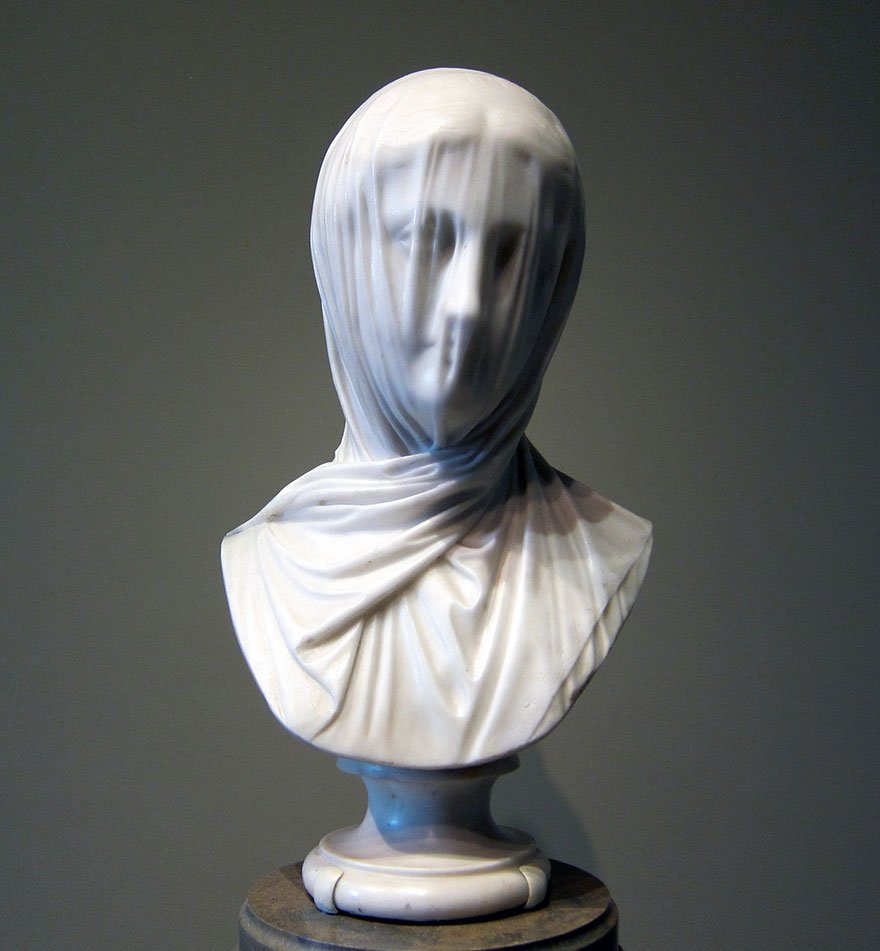
| 9 | Veiled Virgin Mary Bust | Contemporary workshop; artist not identified | Marble | Decorative reproduction / private ownership | Image and retail record |
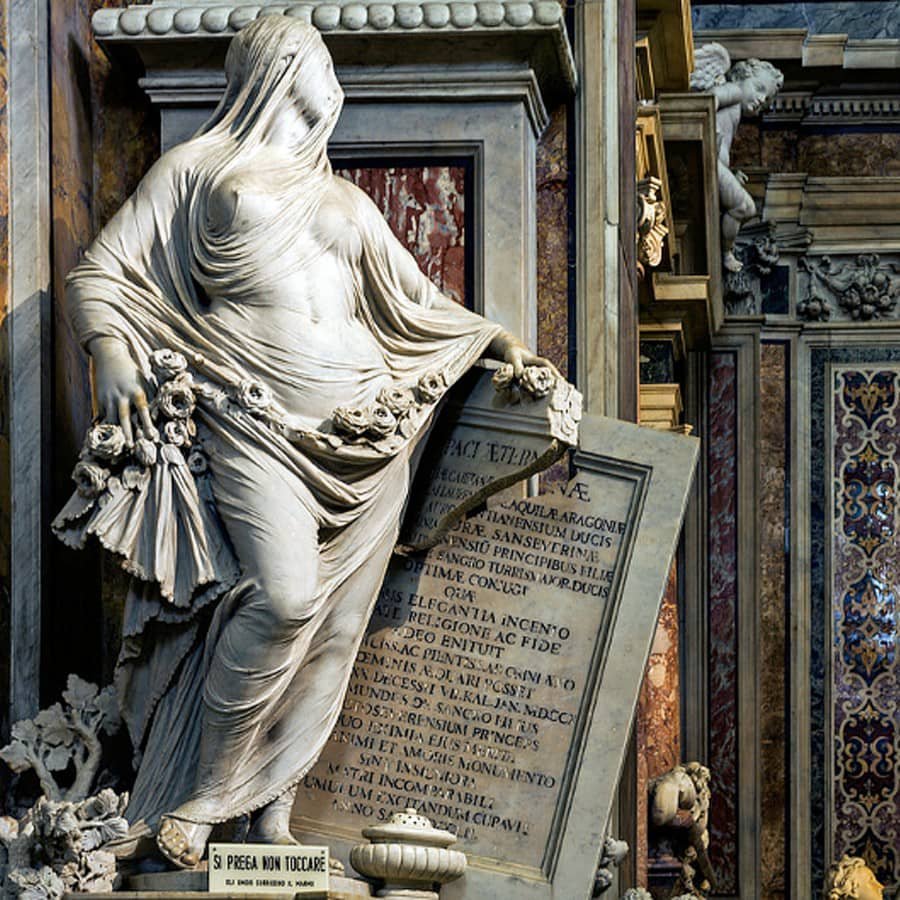
| 10 | The Veiled Christ | Giuseppe Sanmartino, 1753 | Marble | Sansevero Chapel Museum, Naples | Museo Cappella Sansevero |
| 11 | The Veiled Nun | Unknown Italian sculptor, c. 1863; formerly attributed to Giuseppe Croff | Marble | National Gallery of Art, Washington, D.C. | National Gallery of Art |
| 12 | Luo Li Rong-inspired Draped Woman | Contemporary; exact edition not identified | Bronze, not marble | Studio / private edition | Product record |

This contemporary bust adapts the familiar veiled Virgin motif for a garden, memorial or interior setting. The flower crown and softly carved veil recall nineteenth-century works without claiming to be an original Strazza sculpture.
Giovanni Strazza carved this Carrara-marble bust in Rome, probably in the early 1850s and certainly before it reached Newfoundland in 1856. The figure represents the Virgin Mary, whose facial features remain visible beneath an apparently translucent veil. The work is cared for by the Presentation Sisters in St. John’s, Newfoundland and Labrador.

Monti’s paired allegorical figures contrast sorrow with hope: one head is covered by a veil and the other is crowned with flowers. The marble group was shown at London’s International Exhibition of 1862 and entered the Victoria and Albert Museum collection. The exhibition date explains why the work is sometimes incorrectly dated 1862; the museum dates it to 1861.
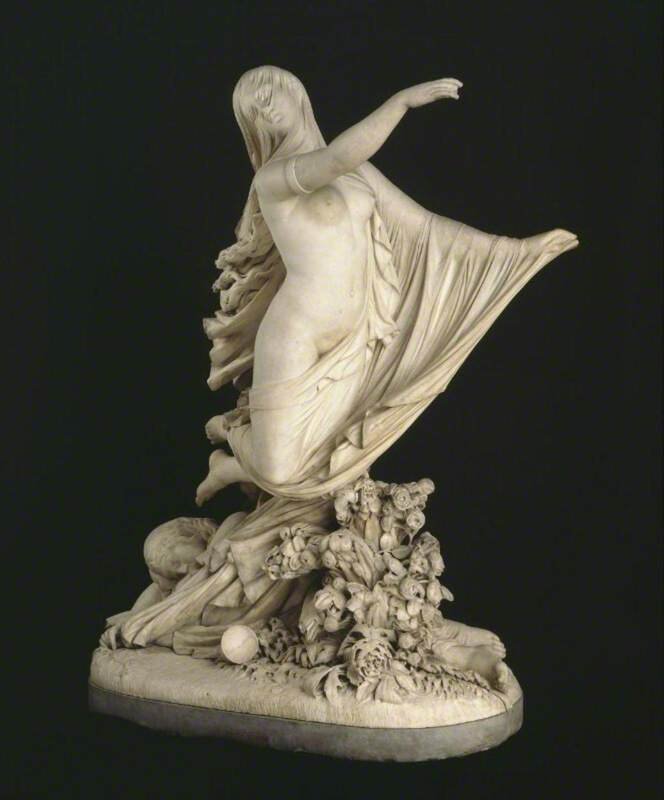
In Sisters of Charity, bowed heads and finely carved veils create a quiet devotional mood. Monti used the folds, floral wreaths and downcast expressions to demonstrate how marble could suggest both weight and transparency. Public sources identify the artist and date, but the work’s present public location is not consistently documented.

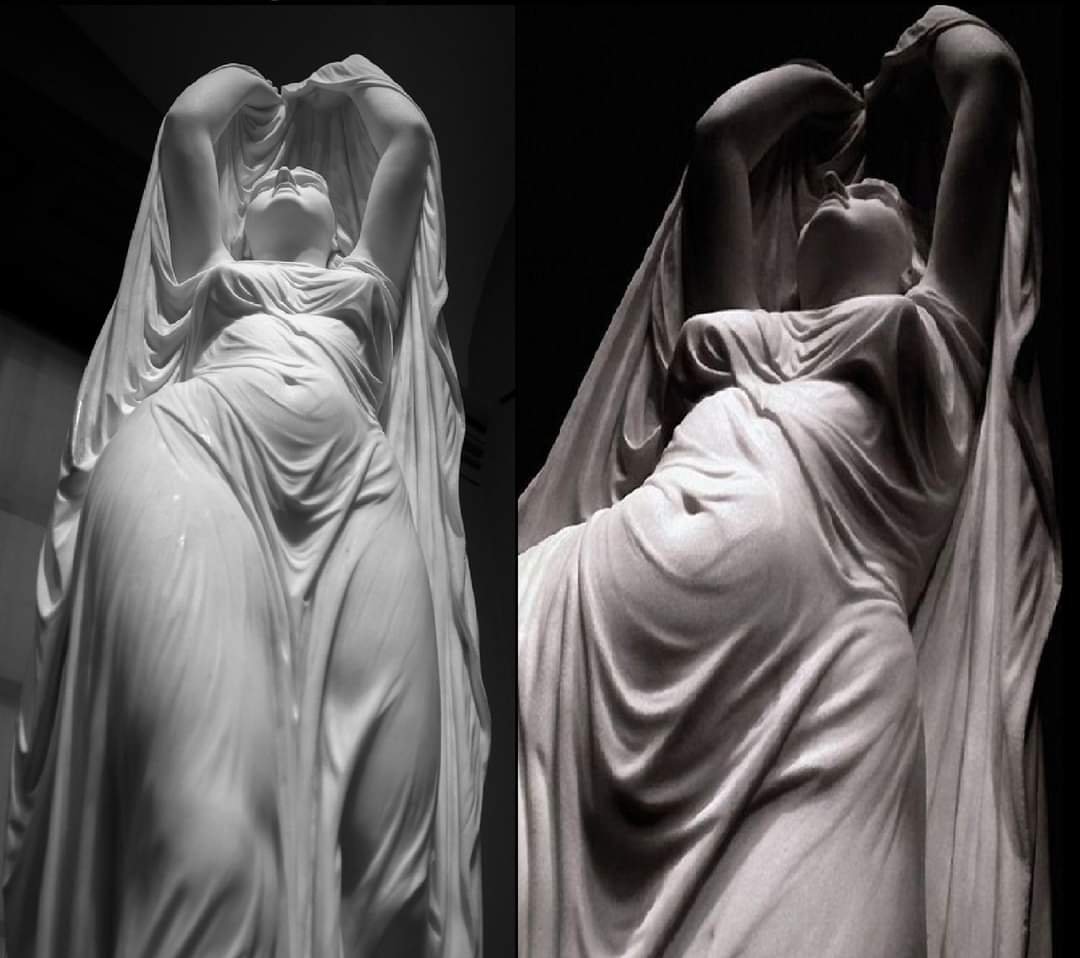
American sculptor Chauncey Bradley Ives represented Undine, the water spirit of European legend, emerging through a clinging sheet of carved marble. Unlike a face veil, the transparent effect covers much of the figure and makes the work an important extension of the veiled-sculpture tradition.
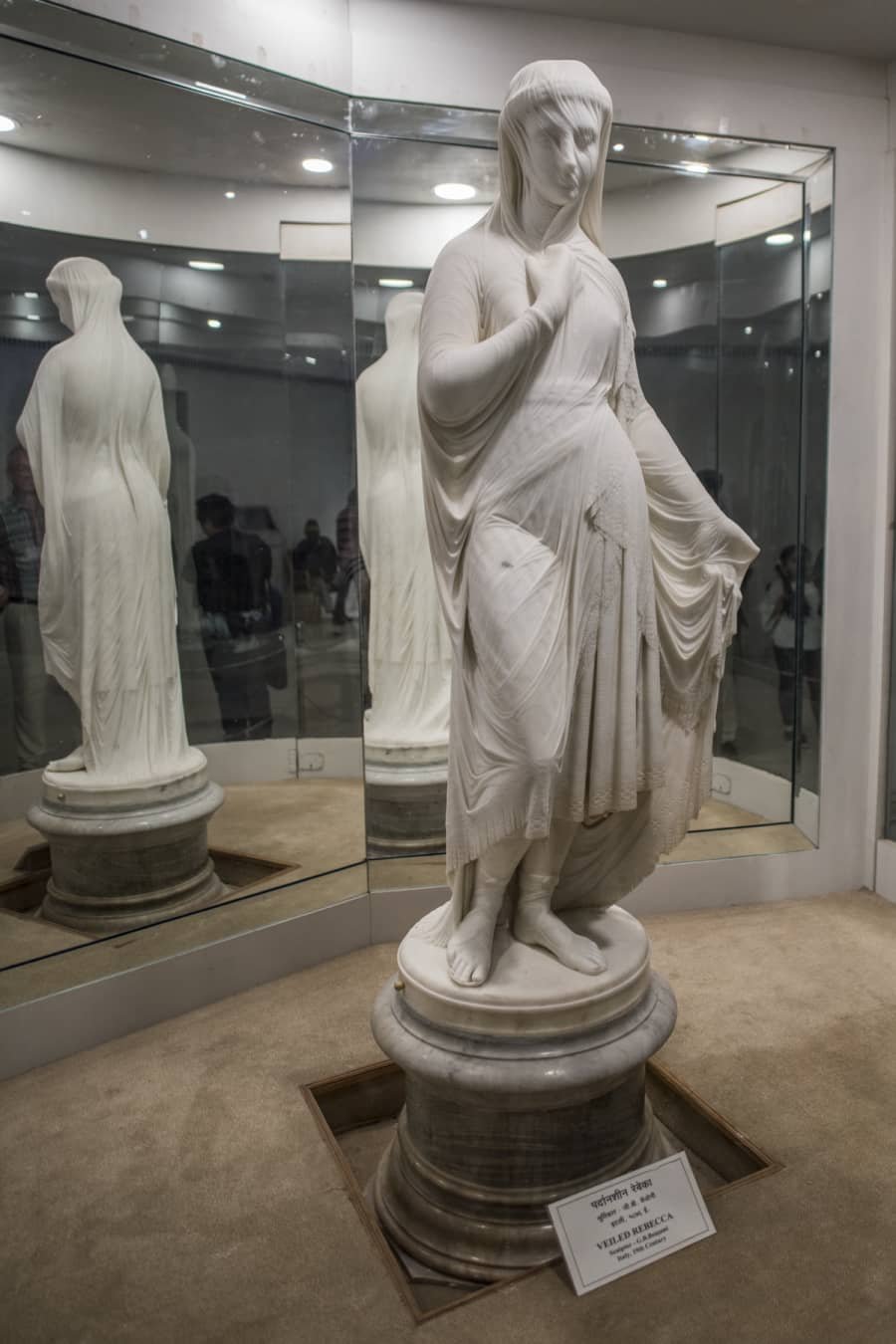
Veiled Rebecca shows the biblical Rebecca covering herself before meeting Isaac. Benzoni produced multiple versions in different sizes, so a single date and location can be misleading. The principal design dates to 1863; recorded versions include an 1864 example at the High Museum of Art and a later version at the Salar Jung Museum in Hyderabad.
Monti’s Veiled Vestal evokes a priestess of Vesta, the Roman goddess of the hearth. The serene face, wreath and layered veil make this bust one of the clearest demonstrations of the sculptor’s undercutting and polishing technique. The work is associated with the Devonshire Collection at Chatsworth.
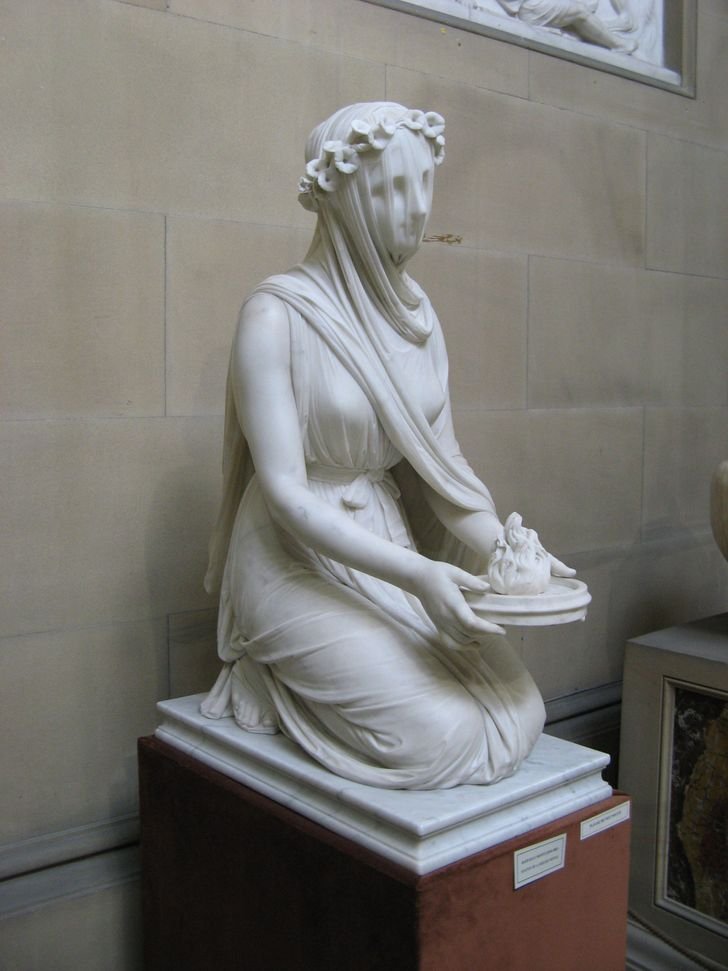
The sculpture often called Veiled Truth is officially titled Modesty (Pudicizia). Antonio Corradini created it as a memorial to Cecilia Gaetani dell’Aquila d’Aragona, mother of Raimondo di Sangro. It remains in its intended setting inside the Sansevero Chapel in Naples.
This image shows a contemporary decorative bust inspired by Strazza’s Veiled Virgin, not a documented nineteenth-century original. The workshop or individual artist is not identified in the available retail record, and examples of this type are normally held in private collections.

Giuseppe Sanmartino carved the dead Christ beneath a transparent shroud, rendering anatomy, fabric and the instruments of the Passion in a single block of marble. The sculpture remains at the Sansevero Chapel, where it was commissioned for the chapel’s program.
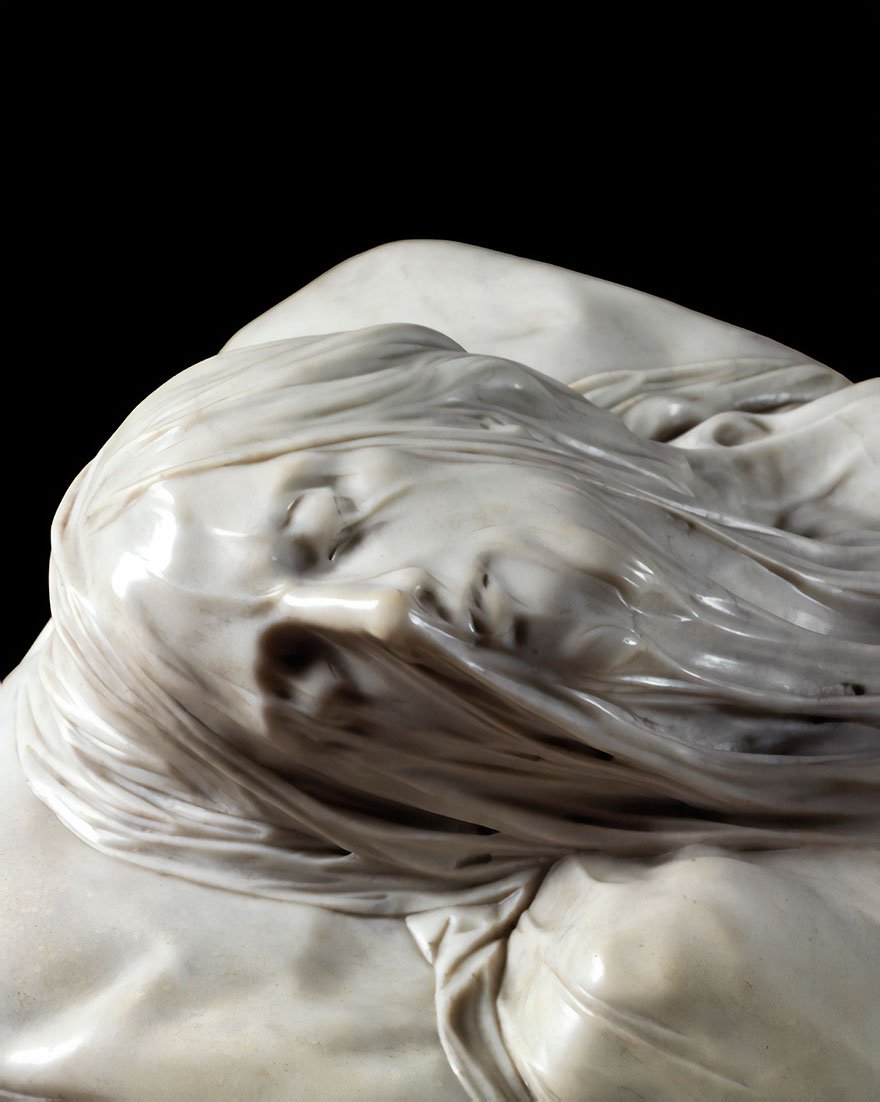
This bust was long attributed to Giuseppe Croff, but the National Gallery of Art now identifies the maker as an unknown Italian sculptor. The corrected attribution matters: the work should not be presented as a confirmed Croff sculpture. It entered the NGA collection from the former Corcoran Gallery of Art.
This final example belongs to a different tradition. It is a contemporary bronze figure inspired by Luo Li Rong’s wind-swept drapery, not a marble veiled statue. It remains useful as a comparison because the flowing garment creates a related illusion of light fabric, but the material and exact edition should be stated accurately.

If you are comparing historically inspired pieces for a private landscape, these low-key links may help:
This optional product module appears after the artwork guide so it does not interrupt the historical content.
The effect does not come from genuinely thin or transparent marble. Sculptors first establish the anatomy, then carve the veil as a second surface that follows the face or body beneath. Shallow relief preserves the features; undercut edges and deeper folds create shadow; progressive sanding and polishing give the marble a skin-like glow. Because one incorrect cut can flatten the expression or break a fold, the technique demands careful planning and fine-grained stone.
Cost varies with size, marble grade, depth of detail, base design, packing and destination. A veiled face generally requires more carving time than a simpler bust. For a realistic project estimate, provide the desired height, installation location, reference style and delivery country; you can also use the statue price estimator as a starting point.
Sources were reviewed in September 2026. Museum attributions and display locations can change, so follow the linked collection record before planning a visit.

 We only use the information provided above to contact you in relation to your inquiry. For further details, read our Privacy Policy.