

Bronze vs Marble Statues is a common question when a garden, villa, estate, or public landscape needs one important artwork. The problem is simple: both materials look beautiful. The risk is harder: outdoor weather, maintenance, and hidden production costs can change the result. I compare them by project fit, not by saying one is always better.
Bronze vs Marble Statues should be chosen by outdoor environment, statue size, artistic style, maintenance expectations, and total cost. Bronze often suits long-term outdoor stability and complex sculptural forms. Marble often suits classical, architectural, and natural stone settings. The best choice should be confirmed according to climate, installation site, craftsmanship, and budget.
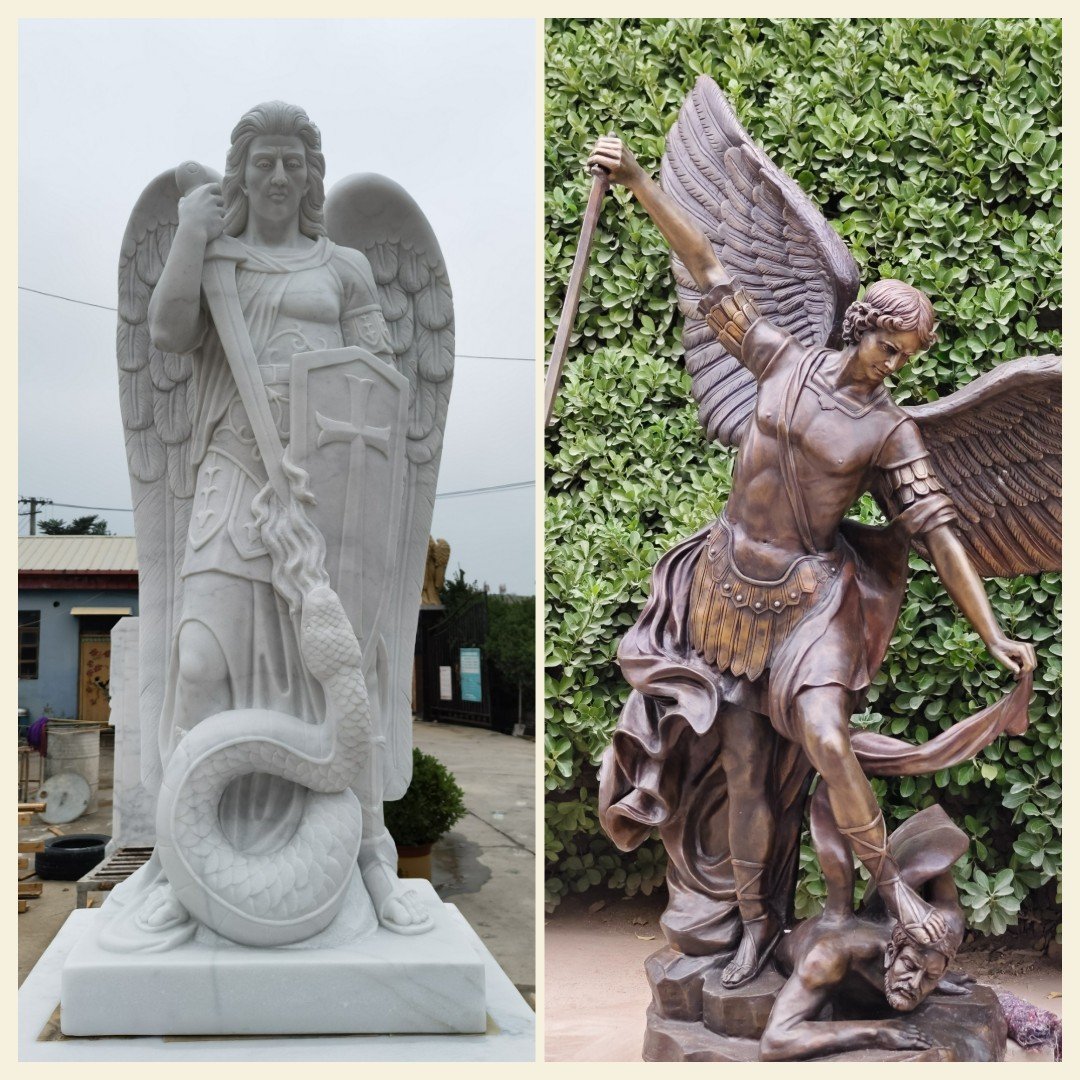
In my years of sculpture production and export communication, I have seen buyers ask the same question in different words: “Which material will last better outside?” The real answer starts with the site, then moves to craft, care, logistics, and cost.
Choosing Bronze vs Marble Statues for outdoor use can feel confusing because both materials have a long history in gardens, courtyards, estates, and museums. The problem appears when weather, pollution, salt air, or freeze-thaw conditions start affecting the surface. A good choice begins with the site, not only the catalog photo.
Bronze is often preferred for exposed outdoor locations, large sculptural forms, and places where lower routine care is important. Marble is often preferred for classical gardens, architectural harmony, and natural stone beauty. However, both materials should be evaluated according to climate, installation base, exposure, size, and expected appearance over time.
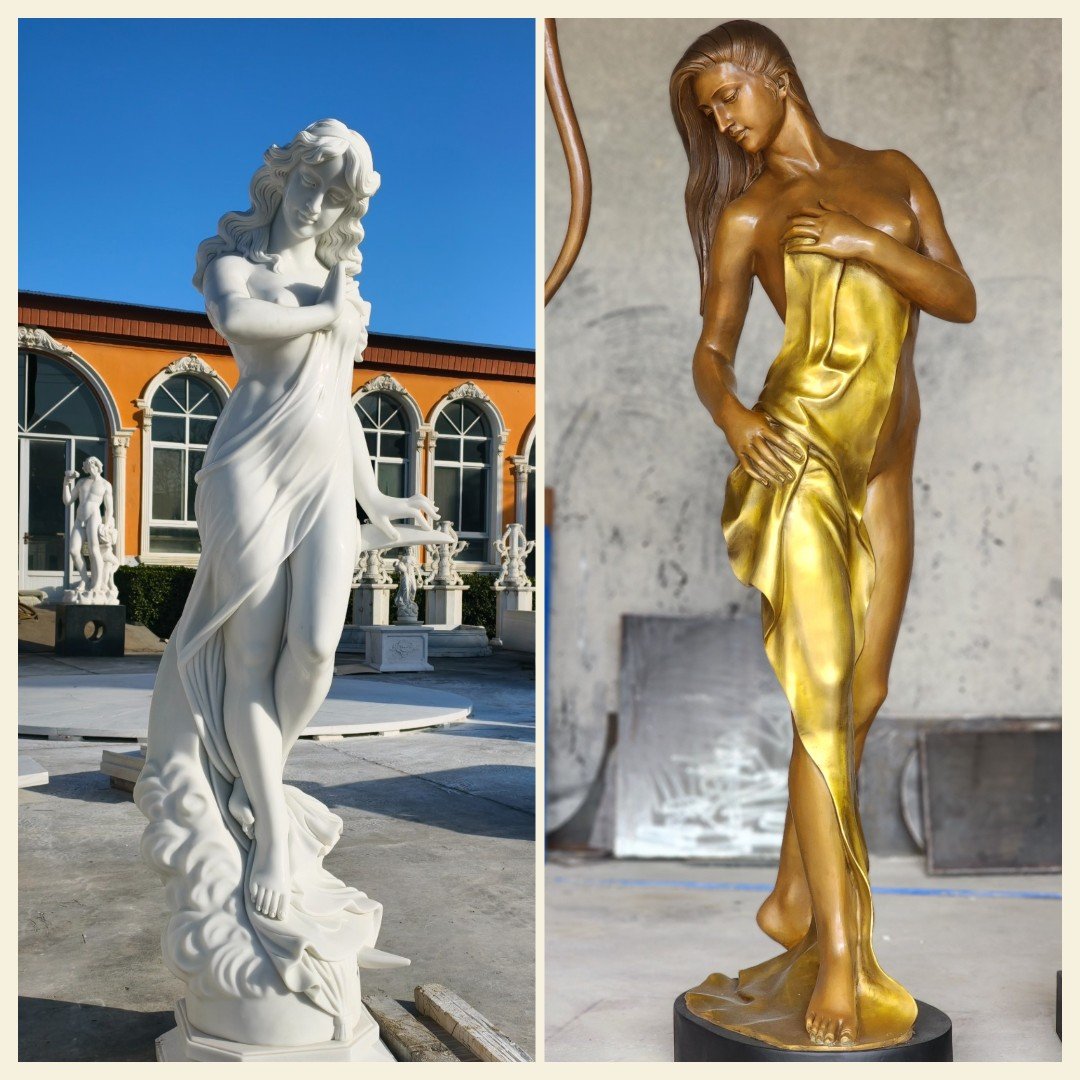
When I discuss a project with a villa owner, designer, or procurement manager, I do not start by saying, “Choose bronze,” or “Choose marble.” I first ask where the statue will stand. A sculpture near the sea, a sculpture under trees, and a sculpture in a dry courtyard do not face the same outdoor conditions.
Important site questions include:
Bronze has been used outside for centuries because it is strong, castable, and suitable for many sculptural forms. In many outdoor projects, bronze handles rain, sun, and general weathering well when the casting, welding, patina, and protective wax or coating are properly done.
However, bronze is not “unchanging.” Its surface finish can develop natural changes. A dark brown patina may soften. A green patina may deepen. Touch areas may become brighter. Buyers should understand this before ordering.
I often tell clients that bronze has a living surface. It can age beautifully, but the finish must match the client’s expectation.
Marble creates a very different feeling. It has a quiet, classical, and architectural presence. White marble statues, garden figures, fountains, columns, and reliefs can match villas, manors, castles, and formal landscapes very well.
But marble depends heavily on stone quality, carving depth, surface finish, drainage, and exposure. Dense, suitable stone performs better than weak or porous material. Fine details, such as fingers, floral carvings, and facial features, need extra care in harsh climates.
| Project Condition | Bronze Often Fits Better | Marble Often Fits Better |
|---|---|---|
| Fully exposed open garden | Yes | Sometimes, with right stone and care |
| Coastal environment | Often, with suitable finish care | Needs careful stone selection and maintenance |
| Classical villa courtyard | Yes | Yes, especially for architectural harmony |
| Highly detailed human or animal form | Yes | Yes, but delicate details need protection |
| Monumental outdoor sculpture | Yes | Yes, but transport and installation need planning |
| Formal European-style garden | Yes | Strong fit |
| Lower routine cleaning expectation | Often | Less often |
| Natural stone design language | Less central | Strong fit |
The key point is this: Bronze vs Marble Statues is not a beauty contest. It is a site decision. A bronze animal statue may be perfect for a wide lawn. A marble figure may be perfect beside a fountain or under a covered loggia. A large public piece may need both artistic and engineering review. For major outdoor installations, I always recommend confirming the foundation, fixing method, local climate, and maintenance plan with qualified professionals before production.
Care is where many buyers feel pressure. They want a statue that looks refined for many years, but they do not want constant maintenance. The problem is that outdoor materials never stay exactly the same. Wind, rain, sunlight, dust, and people all leave marks.
Bronze and marble both age outdoors, but they age differently. Bronze changes mainly through patina, oxidation, surface wax, and touch marks. Marble changes through dirt absorption, biological growth, mineral deposits, surface erosion, and possible staining. Good care means setting the right expectation before installation.
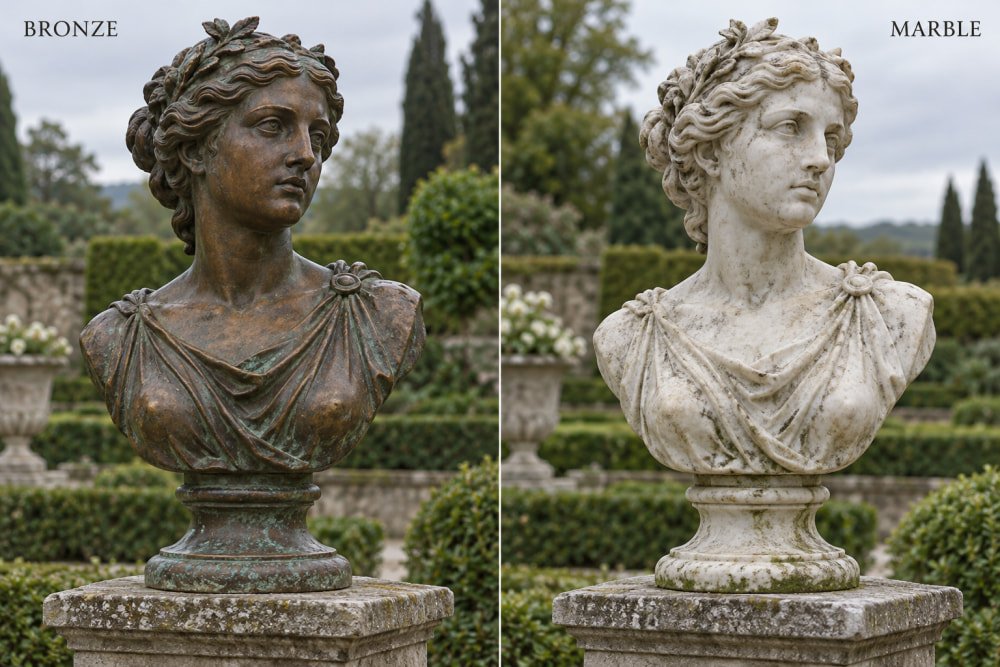
Bronze sculpture care usually focuses on protecting and managing the patina. The patina is the colored surface treatment created after casting and finishing. It may be dark brown, black, green, blue-green, antique gold, or another custom tone. For outdoor use, the patina is often protected by wax or a clear coating, depending on the project requirement.
In many projects, bronze is easier for owners who want a strong outdoor sculpture with less frequent cleaning. Still, it should not be ignored.
Common bronze care points include:
Bronze can show color movement over time. This is normal in many outdoor settings. Some clients love this natural aging because it gives the sculpture depth. Other clients want the color to remain closer to the original finish. Those two expectations require different care plans.
Marble care is different because marble is natural stone. The stone has veins, pores, color variation, and mineral structure. A good marble statue begins with careful block selection. In our production work, we pay close attention to cracks, color consistency, carving direction, and whether the stone suits the statue design.
Outdoor marble needs correct cleaning. Strong acid cleaners are risky because they can damage calcium-based stone. High-pressure washing can also damage detailed carving if used carelessly.
Common marble care points include:
| Care Factor | Bronze Statue | Marble Statue |
|---|---|---|
| Main surface concern | Patina change, oxidation, wax wear | Dirt, staining, biological growth, erosion |
| Routine cleaning | Usually simple | Needs gentle stone-safe cleaning |
| Color change over time | Expected, often part of character | Possible through weathering and staining |
| Detail protection | Strong for thin forms when cast well | Fine details need careful stone and placement |
| Chemical sensitivity | Avoid harsh cleaners | Avoid acids and aggressive cleaners |
| Maintenance style | Patina management | Stone preservation |
When I speak with overseas buyers, I try to make the maintenance conversation simple. If the client wants a sculpture for an open lawn, public garden, or coastal villa, bronze may reduce worry in many cases. If the client wants a formal classical feeling near marble paving, columns, stairs, or a fountain, marble may create the right atmosphere.
However, I never tell a client that any outdoor statue is maintenance-free. That would not be honest. Even stainless steel, bronze, marble, granite, and resin change when placed outdoors. The goal is to choose a material whose aging style matches the project.
For Bronze vs Marble Statues, care is not only about cleaning. It is also about emotional expectation. Some owners want the statue to age naturally. Some want it to remain close to the first-day appearance. The supplier should explain this clearly before production, because the wrong expectation can become an after-sales problem later.
Many buyers first compare purchase price. I understand this because budgets are real. The problem is that the first quotation does not always show the full cost. Material quality, carving complexity, casting process, surface treatment, packing, shipping, installation, and later care all affect the real investment.
The total cost of Bronze vs Marble Statues should include material grade, artistic complexity, production method, finishing standard, structural support, export packing, freight, installation, and maintenance. Bronze may cost more in casting and metal work. Marble may cost more in premium stone selection, hand carving time, and safe transport weight.
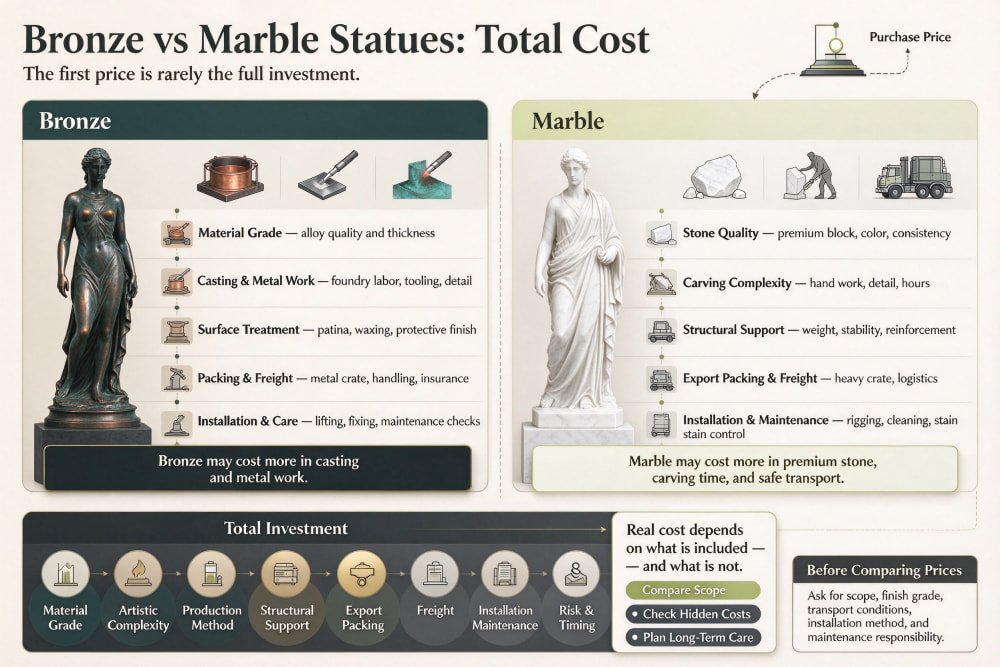
A low price can look attractive, but it may hide risk. In sculpture production, cost is strongly connected to skill and process. A bronze statue is not only metal weight. A marble statue is not only stone volume. The quality comes from modeling, carving, casting, welding, polishing, patina, inspection, and packing.
When I review a project, I usually divide cost into visible cost and hidden cost.
Visible costs include:
Hidden or often missed costs include:
Bronze statue cost often depends on the casting process, sculpture size, thickness standard, complexity, and patina requirements. Many high-quality bronze sculptures use lost-wax casting. This process can capture fine details, but it requires skilled mold making, wax work, shell making, casting, welding, chasing, polishing, and patina.
Bronze cost drivers include:
Modeling quality A better model creates better form and expression.
Casting thickness and structure Outdoor bronze statues need suitable thickness and internal support when required.
Welding and chasing The surface should not show poor joint lines or rough repair marks.
Patina and protection Stable outdoor color requires skilled finishing and suitable protective treatment.
Engineering for large work Monumental sculptures need structure and installation review.
Marble statue cost often depends on stone quality, block size, carving time, detail level, and finishing. A simple garden statue and a highly detailed classical figure can have very different labor requirements, even if their size is similar.
Marble cost drivers include:
| Cost Area | Bronze Statue | Marble Statue |
|---|---|---|
| Material cost | Metal market and alloy quality matter | Stone type and block quality matter |
| Main labor | Modeling, casting, welding, chasing, patina | Hand carving, polishing, detail finishing |
| Detail flexibility | Excellent for complex shapes | Excellent, but thin details can be fragile |
| Shipping factor | Usually lighter than same-size solid stone | Heavy and needs strong crate support |
| Installation | Needs secure fixing and sometimes internal structure | Needs stable base and lifting plan |
| Maintenance cost | Patina care, wax/coating refresh | Gentle cleaning, stain prevention, stone care |
| Budget risk | Poor casting can reduce value | Poor stone or carving can reduce value |
For procurement managers and project buyers, I suggest comparing quotes with the same specification. If one supplier quotes a bronze statue with thin casting and simple patina, and another quotes thicker casting with high-level chasing and outdoor treatment, the prices cannot be compared directly. The same is true for marble. A premium hand-carved white marble figure is not the same product as a roughly carved statue in lower-grade stone.
Before choosing between Bronze vs Marble Statues, buyers should request clear details:
This comparison makes the decision more professional. It also reduces future disputes.
A statue can be durable and still feel wrong in the space. This is a common problem in luxury landscape and architectural projects. The material must support the design language. If the statue does not match the garden, facade, paving, fountain, or interior view, the whole project can feel unbalanced.
Bronze often matches expressive forms, animals, contemporary figures, and monumental outdoor works. Marble often matches classical figures, architectural gardens, fountains, columns, and formal estate spaces. The right choice depends on the visual mood, surrounding materials, scale, and whether the project needs contrast or harmony.
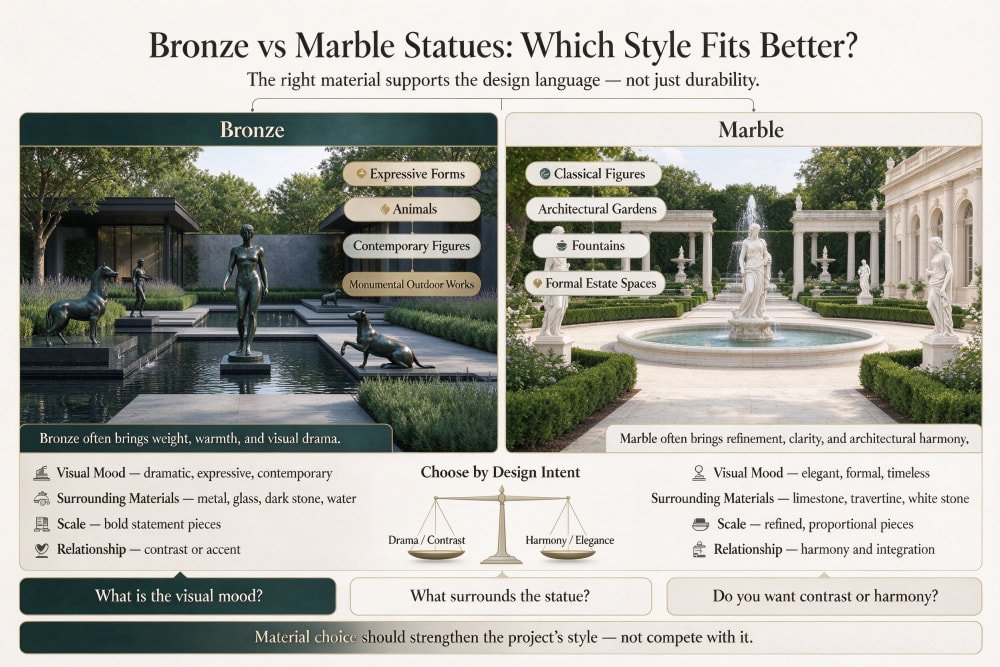
Bronze is very flexible for artistic expression. It can hold dynamic movement, thin extensions, animal muscles, flowing clothes, wings, and abstract shapes. For this reason, bronze is widely used for outdoor animal sculptures, public art, portraits, equestrian statues, and contemporary garden pieces.
A bronze statue can look powerful without needing to be extremely bulky. This helps when the design has raised arms, running animals, open spaces, or complicated shapes. The casting process allows forms that may be difficult or risky in marble.
Bronze often works well for:
Marble gives a different emotion. It feels calm, noble, and connected to classical architecture. Many buyers choose marble because it matches columns, balustrades, fireplaces, fountains, gazebos, and stone facades. A marble statue can make a garden feel more formal and timeless.
Marble is especially strong when the project wants natural stone texture. The veins and slight color changes are not defects when selected well. They are part of the stone’s character.
Marble often works well for:
| Design Goal | Better Starting Point | Why |
|---|---|---|
| Classical European garden | Marble | It matches stone architecture and formal layouts |
| Dramatic animal sculpture | Bronze | It captures movement and strong form well |
| Contemporary public plaza | Bronze or stainless steel | It supports large expressive shapes |
| Quiet courtyard centerpiece | Marble | It gives calm natural beauty |
| Coastal villa feature | Bronze often worth considering | It can offer strong outdoor performance with finish care |
| Museum-style replica | Depends on original | Material should match artistic intent |
| Fountain group | Marble or bronze | Water, style, and structure decide |
I usually ask clients to send reference images, site photos, architectural drawings, and expected mood. A single statue can look very different depending on background. A dark bronze figure in front of light stone can look strong and clear. A white marble statue in a green garden can feel soft and elegant. A bronze animal at the entrance of an estate can create energy. A marble goddess near a fountain can create romance.
For Bronze vs Marble Statues, style should not be decided only by personal taste. It should be checked against the whole project:
This is also where custom sculpture becomes valuable. Size, pose, surface finish, pedestal, and base can be adjusted. A good supplier should help the buyer protect the artistic idea while also considering production feasibility and outdoor performance.
Even when the material decision is correct, the wrong supplier can create risk. A beautiful rendering does not guarantee good casting, carving, packing, or export handling. Buyers need proof of production ability, clear communication, and quality control before shipment.
Buyers should choose a sculpture supplier by checking production experience, material control, craft process, customization ability, export packaging, inspection support, and after-sales communication. For outdoor statues, buyers should also confirm finish treatment, structural fixing, maintenance guidance, and whether professional installation review is needed.
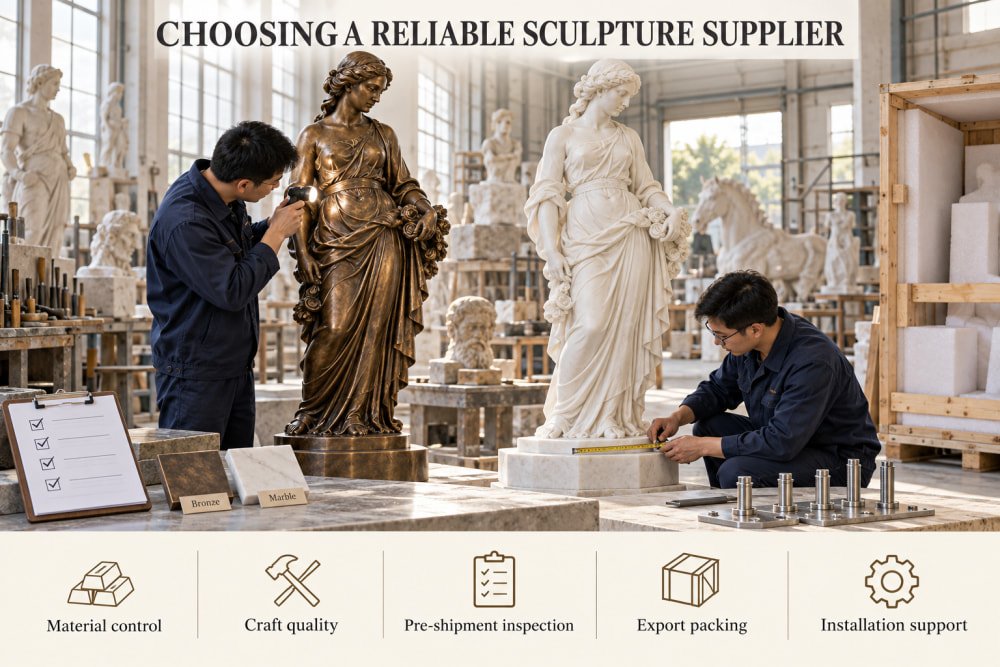
In sculpture procurement, trust is important, but verification is also important. I have worked with many international buyers who manage projects from far away. They cannot always visit the workshop. So clear documentation and process updates become very important.
A serious supplier should be able to discuss:
For bronze outdoor statues, buyers should pay attention to the full production chain. Good casting is not only pouring metal. It includes many steps that affect the final appearance.
Key bronze inspection points include:
Model accuracy The shape should match the approved drawing, clay model, or 3D file.
Casting quality The surface should not show serious holes, cracks, or deformation.
Welding and chasing Joint areas should be refined and consistent with the surrounding surface.
Patina finish Color should match the approved sample or reference as closely as practical.
Structure and base fixing Outdoor installation should be reviewed for safety and stability.
For marble outdoor statues, the early choice of stone is very important. A good carving team can do a lot, but poor material limits the final result.
Key marble inspection points include:
| Evaluation Item | What Buyers Should Ask |
|---|---|
| Experience | Has the supplier made similar outdoor statues before? |
| Material knowledge | Can the supplier explain stone, bronze, finish, and care differences? |
| Custom process | Can they work from drawings, photos, 3D files, or mood boards? |
| Production updates | Will they provide photos and videos during production? |
| QC process | What checks happen before packing? |
| Export ability | Do they use reinforced wooden crates and moisture protection? |
| Trade terms | Can they support suitable terms such as FOB, CIF, or DDP where possible? |
| Installation support | Can they provide fixing notes or remote guidance? |
| After-sales communication | Will they respond if questions appear after delivery? |
For Bronze vs Marble Statues, supplier quality can change the result as much as the material itself. A well-made marble statue in the right site can perform beautifully. A poorly cast bronze statue can disappoint quickly. A strong supplier does not simply sell a product. A strong supplier helps the buyer reduce project risk.
At Mily Art, my experience comes from real sculpture production, export packing, and after-sales communication. I have seen why buyers need clear photos, videos, dimensions, finish confirmation, and packing details before shipment. I also know that large outdoor statues may require local engineers, installers, or landscape professionals to confirm the foundation and safety details. A responsible supplier should welcome that review, not avoid it.
Bronze is often better for exposed outdoor sites, dynamic forms, and lower routine care. Marble is often better for classical architecture, formal gardens, and natural stone beauty. The better choice depends on climate, location, statue size, style, and maintenance expectations.
Marble can last outdoors when the stone quality, carving design, placement, drainage, and cleaning care are suitable. However, marble can stain, weather, or lose sharp detail over time, especially in polluted, wet, coastal, or freeze-thaw environments. Project-specific confirmation is important.
Yes, bronze can change color outdoors. Patina may deepen, soften, darken, or develop natural variation because of weather, touch, moisture, and air conditions. This aging can be attractive, but buyers should confirm patina expectations and maintenance methods before ordering.
The cost depends on size, design, material grade, craft level, finish, packing, and shipping. Bronze may cost more because of casting, welding, chasing, and patina work. Marble may cost more when premium stone, detailed hand carving, heavy shipping, and careful installation are required.
Clean gently and avoid harsh chemicals. Bronze usually needs soft cleaning and possible wax or finish care. Marble needs stone-safe cleaning, stain prevention, and good drainage. Large or valuable outdoor statues should be inspected regularly, especially after severe weather or winter conditions.
Bronze vs Marble Statues is not a question of which material is always superior. It is a project-fit decision. Bronze often suits exposed sites, expressive forms, and long-term outdoor stability. Marble often suits classical spaces, architectural harmony, and natural stone beauty. Buyers should compare climate, size, style, craftsmanship, total cost, and maintenance before ordering. If you are planning a custom outdoor statue for a villa, estate, gallery, or landscape project, I welcome you to contact Mily Art Sculpture for material suggestions, production discussion, and export support.
<!--[googlesitekit-end-of-content]-->

 We only use the information provided above to contact you in relation to your inquiry. For further details, read our Privacy Policy.